Electrolysis
Scabs After Electrolysis: What Is Normal and What Is Not
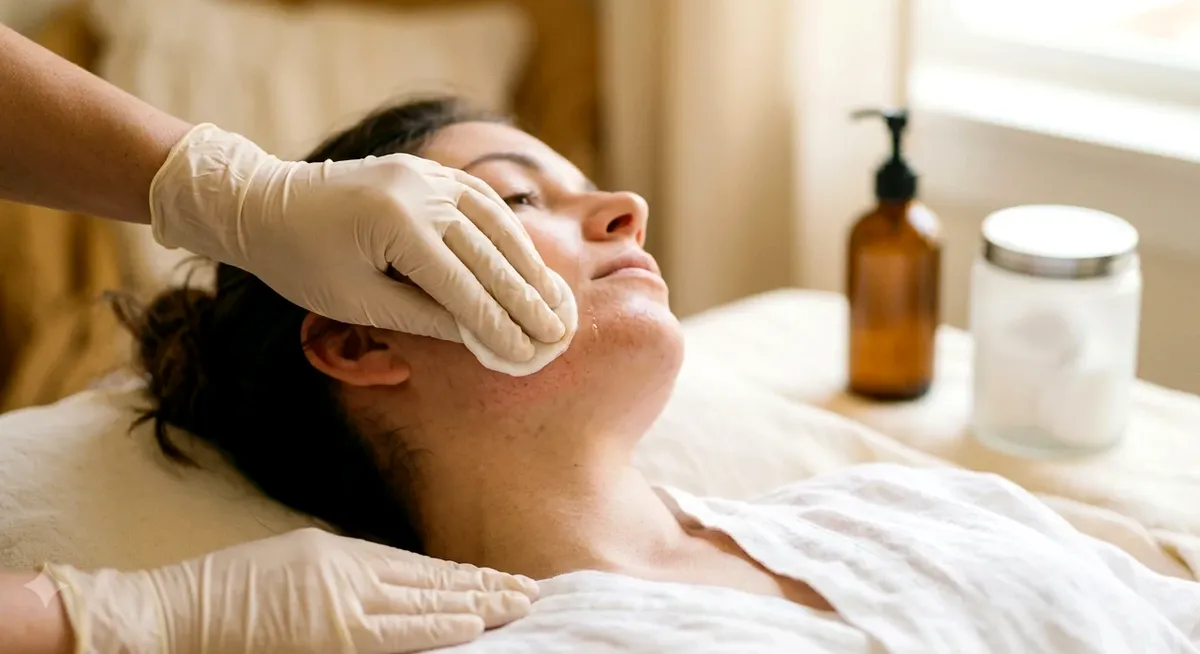
Quick answer
Small, dry, pinpoint scabs after electrolysis are normal healing, most common on body areas, and they shed on their own if left alone. Facial crusts are brief, body crusts can take a week or two. Warning signs are a soft white or yellow head, pain rising on day two or three, hot skin, spreading redness, streaks, or fever.
Tiny scabs after electrolysis are one of the most common reasons a client texts me a worried photo two days after a session. In almost every case the answer is the same: pinpoint redness, mild puffiness, and small dry crusts sitting exactly where the probe entered are the skin's ordinary repair response, and they fade on their own without treatment. Each treated follicle is a controlled micro-injury, and the body closes it the way it closes any small nick: a little inflammation first, then a protective crust, then fresh skin underneath.
What deserves attention looks different. A soft white or yellow head instead of a dry dot, pain that climbs on the second or third day instead of easing, skin that feels clearly hotter than the area next to it, or redness that spreads into one patch instead of staying around individual follicles: those are not healing, they are warning signs. This guide walks through what normal looks like day by day, how scabs differ from infection, how different body areas behave, what to do if something looks wrong, and how to lower the odds of scabbing in the first place.
Why scabs form after electrolysis
Electrolysis works one follicle at a time. A very fine probe slides into the natural opening of the follicle, and a brief pulse of current destroys the cells that grow the hair. Depending on the modality, that pulse works through heat, through a chemical reaction in the follicle's moisture, or through both. Either way, the tissue at the bottom of the follicle has been deliberately damaged, and the body responds the way it responds to any small injury: blood flow to the spot increases, vessels widen, and a little fluid collects. That is the redness and puffiness you see in the first hours.
A scab is the next step in that repair. A small amount of fluid, and sometimes a trace of blood, rises through the follicle opening, dries at the surface, and forms a pinhead crust. The crust is a natural bandage. It seals the opening while new tissue forms below, and it lets go by itself when the skin underneath is ready. This is why I tell clients that a dry, flat, pinpoint scab is not a problem to solve. It is the visible part of healing that is already going well.
Scabbing is more common on the body than on the face. Body follicles are deeper and coarser, they need more energy, and the skin of the legs, bikini line, and underarms heals more slowly than facial skin with its rich blood supply. On the face, a careful practitioner aims for little to no crusting, because crusts there are more visible and the skin is thinner. A few scattered pinpoint scabs on a chin after a heavy clearing session are still within normal. A dense field of crusts after every facial session is a reason to talk about settings, which I cover further down.
What normal skin looks like right after a session
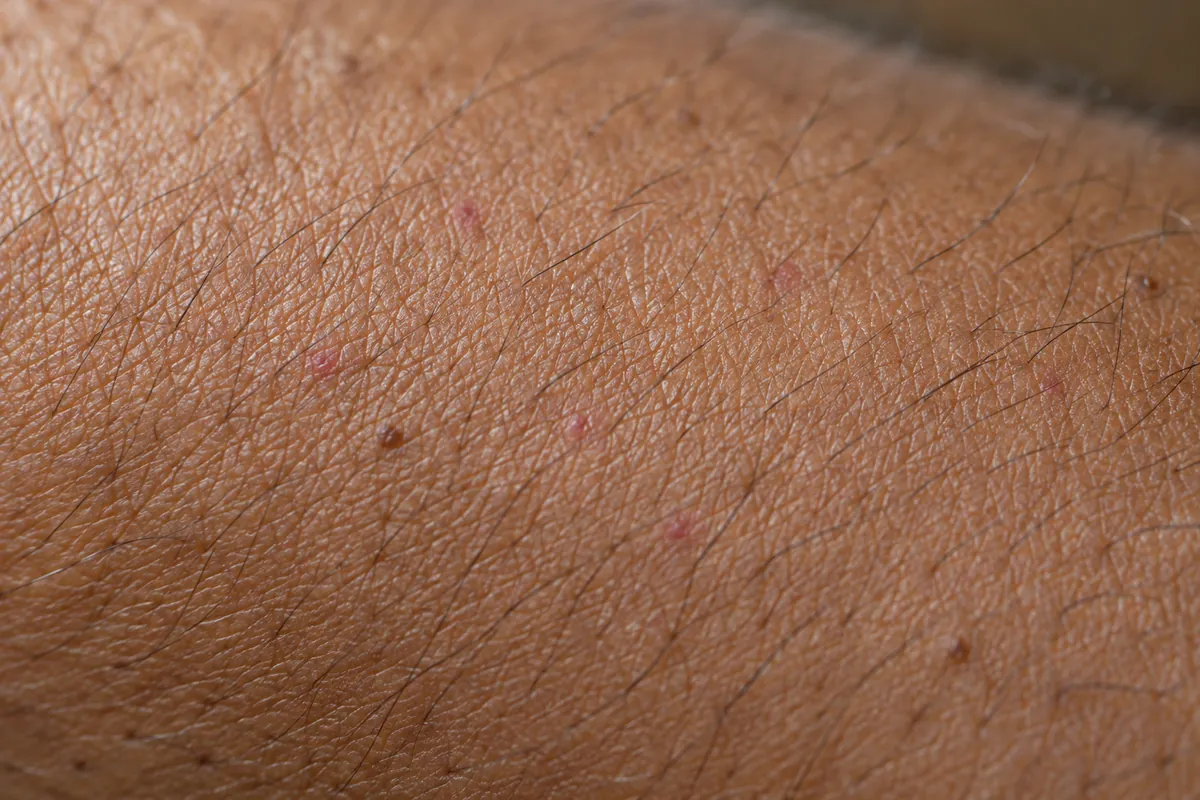
Immediately after treatment you should expect small red dots sitting exactly at the treated follicles, sometimes with a faint pale center. Around them there may be a flush of pink and slight swelling, a little like a cluster of mosquito bites. In thin, sensitive areas such as the upper lip, underarms, and bikini line, the flush tends to be more diffuse and the puffiness can hang around for several hours. On denser skin such as the lower legs, the reaction often stays limited to dots and fades faster. That difference comes from skin thickness and blood vessel density, not from the quality of the work.
Mild itching in the first hours is also part of the picture. Histamine released during the inflammatory response irritates nerve endings in the skin, the same reason a healing scratch itches. The itch should be tolerable and it should fade. It should not be unbearable, and it should not get stronger on the second day. A feeling of warmth, as if you had a mild sunburn on that patch, is equally ordinary on the day of treatment. What matters is not any single sensation but the direction things move in over the next days.
Normal healing versus warning signs: a side-by-side table
The simplest way to judge your own skin is to compare it with a short list of features. I give my clients a version of the table below and ask them to check it once a day for the first three days. If everything sits in the middle column, you are healing. If one item moves into the right column, watch closely for a day and send your electrologist a photo. If several do, or if you see any of the body-wide signs in the last rows, that is a medical question and not a beauty question.
| Feature | Normal healing | Warning sign |
|---|---|---|
| Redness | Pinpoint, around individual follicles, fading over the first few days | Diffuse, merging into one patch, spreading beyond the treated spots |
| Pain | Mild tenderness that is clearly less the next day | Pain that increases on day two or three |
| What sits on the spot | A dry, flat, pinpoint crust with no discharge | A soft white or yellow head, or oozing |
| Skin temperature | Slightly warm for a few hours, then the same as nearby skin | Noticeably hot to the touch right at the treated area |
| Swelling | Moderate, settling within hours to a day | Growing, firm, or spreading into nearby tissue |
| Itching | Mild, in the first hours, fading | Stronger on day two or three, or combined with other signs |
| How you feel overall | No change | Fever, chills, fatigue, tender lymph nodes near the area |
| Trend over three days | Steady improvement | No improvement, or clearly worse |
One distinction trips people up more than any other: a crust versus a whitehead. A crust is dry, flat or barely raised, tan to reddish brown, and it does not hurt unless you press on it. A pustule is soft, domed, white or yellowish, often with a red rim, and it is tender. Crusts are part of repair. Pustules mean bacteria reached the open follicle and the body is fighting a local infection. A single small pustule is usually manageable, but it is not a stage of healing and it should not be ignored or squeezed.
A day-by-day healing timeline
On the day of treatment the skin looks its most irritated. Red dots, a pink flush around them, and some puffiness in sensitive areas are all at their peak. From here the reaction should only go down. Keep the area clean, keep your hands off it, and skip heat, sweat, and makeup over the treated patch for the rest of the day. Detailed first-day rules are in my electrolysis aftercare guide, and they matter most in exactly this window, while the follicle openings are still fresh.
On the next day the redness is usually visibly paler. This is when the first dry crusts tend to show up on some of the treated spots, especially on the body. They can appear a day or two later as well, which surprises people who thought they had escaped scabbing. A crust that shows up on day two is not a new problem. It is the same micro-wound drying out on schedule. Do not pick it, scrub it, or soften it off in a hot bath.
Over the following days the crusts gradually loosen and flake away, and the skin tone evens out. Facial crusts are typically small and brief. Body crusts are often darker, a little larger, and noticeably slower, and it is common for them to take a week or two to release fully on legs or the bikini line. The benchmark is not a specific day on the calendar. It is that each day looks a bit calmer than the last, and that the crusts stay dry and flat the whole time.
After a crust falls, the skin underneath can look pink on lighter skin or slightly darker than the surrounding skin on medium and deep skin tones. That mark is post-inflammatory color change, not a scar, and it fades over the following weeks as long as it is protected from sun. Clients with deeper skin tones are more prone to these temporary dark dots, which is one reason I am strict about sunscreen during a course of treatment. I go into this in more depth in the guide to electrolysis for dark skin.

How healing differs by body area
The face, especially the upper lip and chin, has thin skin and a dense network of small vessels. Redness there is more visible than on the body, and swelling of the lip can last a bit longer than a day after a long session. That alone is not a reason to worry, as long as each mark looks like a dot and not like an inflamed bump with a soft head. Facial skin also heals fastest, so pinpoint crusts on the chin usually come and go quickly. Many of my facial clients never see a crust at all, only a day of pink dots.
Underarms deal with constant friction from clothing and constant moisture. That combination makes them the area where a lapse in aftercare shows up fastest. I ask clients to skip deodorant and tight synthetic tops for the first day, to wear something loose and breathable, and to postpone workouts that leave the area damp for hours. If you are treating this area, my underarm guide covers the practical side in detail.
The bikini area needs the strictest hygiene because of warmth, friction from underwear seams, and the natural bacteria that live nearby. Crusts here are common and slower to shed. Loose cotton underwear, no tight leggings, and no pools or hot tubs for the first days make a real difference. In this area I do not let a reaction that looks off sit for more than a day without a photo sent to me. The hair is coarse and deep, the energy needed is higher, and the conditions for bacteria are friendlier than anywhere else on the body.
Legs and arms usually react more mildly per follicle because the skin is denser. The catch is area. When a large zone is treated in one sitting, the total load on the skin is higher, mild swelling can linger, and the lower legs in particular heal slowly because circulation there is slower. Leg crusts are the ones most likely to still be visible well into the second week. They are also the ones most likely to be scratched off absentmindedly or knocked off by a razor, so they need some patience.
Signs that point away from normal
There is a specific set of symptoms that tells me a client is no longer dealing with the standard skin reaction and that an infection may be starting. I separate them into two tiers, because the right response is different. The first tier means watch closely for a day and contact your electrologist with a photo. The second tier means contact a physician promptly and do not wait for your electrologist to answer.
- Watch closely and message your electrologist: a soft white or yellowish head on a treated spot, sometimes with a red rim, in place of a dry crust.
- Watch closely and message your electrologist: pain that increases on the second or third day. Tenderness on the day of treatment is expected, rising pain a day or two later is not.
- Watch closely and message your electrologist: skin that is clearly hotter to the touch in the treated area than the skin next to it, after the first day.
- Watch closely and message your electrologist: redness that spreads past the individual dots and merges into one patch, especially if the patch grows from one day to the next.
- See a physician promptly: red streaks running from the area toward the nearest lymph nodes.
- See a physician promptly: swollen, tender lymph nodes near the treated area, for example under the jaw after facial work or in the groin after bikini work.
- See a physician promptly: fever, chills, or unusual fatigue, which suggest the process is no longer only local.
Why inflammation or infection can start
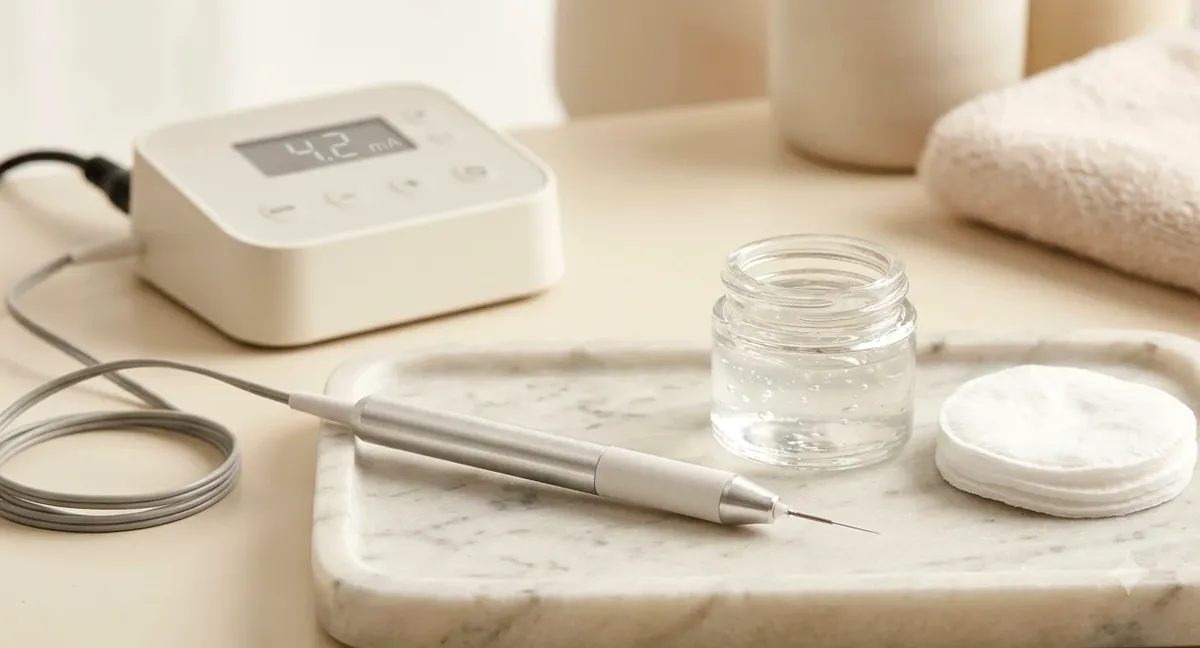
Infection after electrolysis is uncommon when protocol is followed, but when it happens there is always a concrete cause. "My body just reacted" is rarely the full story. The first possible cause sits on the practitioner's side: instruments. Professional practice relies on sterile, single-use, pre-packaged probes opened in front of the client, or on reusable instruments that go through a full validated sterilization cycle. Forceps and other tools that touch treated skin need the same discipline. A clean-looking room is not proof of this. You are entitled to see the sealed probe package before the session, and my guide to electrolysis needles explains what you should be looking at.
The second and far more frequent cause is home care in the first day or two. Touching the area with unwashed hands, going to the gym, soaking in a pool or hot tub, applying heavy makeup or fragranced products to fresh follicle openings, and scratching an itchy patch all give bacteria an easy way in. A single-use probe lowers the risk but does not remove it, because bacteria can arrive from the skin's own surface, from fingers, from a phone screen pressed to a freshly treated cheek, or from a pillowcase that is overdue for washing.
Third, skin itself varies. People with oily, breakout-prone skin or a history of folliculitis react more readily, all else being equal. That is not a reason to give up on treatment. It is a reason to tell your electrologist, to start with shorter and gentler sessions, and to space the treated follicles further apart in the first visits. Fourth, some health conditions raise the risk of complications from any break in the skin: an active skin condition in the treatment area, a tendency to form keloid scars, or diabetes that is not well controlled. These belong on your intake form, and a responsible electrologist will ask about them before the first insertion.
Finally, there is a common mix-up with ingrown hairs. If you were shaving, tweezing, or waxing the area shortly before starting electrolysis, there may already have been ingrown hairs with their own small inflammation. After the session these bumps are easily blamed on the treatment. The clue is a dark dot or a visible loop of hair inside the bump. Your electrologist can tell the two apart on inspection, and electrolysis is often part of the fix, as I explain in the guide to electrolysis for ingrown hairs.
When heavy scabbing points to technique or settings
Not every scab story is about aftercare. If you get dense, large, or dark crusts after every session, particularly on the face, the more likely explanation is that the skin is receiving more energy than it needs. That can come from intensity set too high for your skin, from too long a pulse, from repeated passes on the same follicle, from treating follicles that sit too close together in one visit, or from a probe that is not seated at the right depth so that energy is released near the surface instead of at the base of the follicle.
A widespread belief says that a stronger visible reaction means a more effective session. It does not. Destroying the follicle and irritating the surface are two separate things. A skilled electrologist adjusts settings to release each hair with the least surface trauma, and checks the result by how the hair slides out, not by how red the skin turns. Diffuse redness and heavy crusting more often indicate excess energy or overworked skin than better results. The differences between modalities are explained in my guide to galvanic, thermolysis, and blend.
Bring it up directly. Tell your electrologist what the skin looked like on days one, two, and five, and show photos. A professional will welcome that information and adjust: lower intensity, more spacing between treated follicles, a different probe size, or shorter sessions in that area. If the answer is a shrug or "that is just your skin" with no change in approach, and the heavy crusting repeats, that is useful information about whether this is the right practitioner for you.
How to care for scabs so they heal without marks
The care itself is simple, and most of it is restraint. Wash your hands before touching the area for any reason. Cleanse the skin gently with lukewarm water and a mild, fragrance-free cleanser, and pat dry with a clean towel instead of rubbing. Apply only the aftercare product your electrologist recommended, in a thin layer. Thick, greasy layers of ointment over fresh follicle openings can trap heat and bacteria, so more is not better. If you were not given a product, ask before improvising with whatever is in the cabinet.
Leave the crusts alone. This is the single rule that prevents most of the marks I see. A crust removed early pulls off the new tissue forming beneath it, reopens the spot, and raises the odds of a dark mark or a small pitted scar. Crusts release in their own time, usually in the shower or on a towel without you noticing. If they itch, a cool clean compress helps more than scratching. If you catch yourself picking without thinking, cover the area with loose clothing for a few days.
- Skip makeup over the treated area until the next day at the earliest, and use clean brushes or sponges when you resume.
- Avoid hot showers, saunas, steam rooms, and hot yoga for the first day or two. Heat keeps the area swollen and damp.
- Stay out of pools, hot tubs, lakes, and the ocean until the follicle openings have closed.
- Hold off on scrubs, exfoliating acids, and retinoids on the area until the crusts are gone and the skin is calm.
- Protect the area from sun with clothing or a broad-spectrum sunscreen once the skin tolerates it, to limit dark marks.
- Do not shave over crusts. If you need to tidy the area between sessions, wait until they have shed.
- Change your pillowcase after facial sessions and wear clean, loose, breathable fabric over body areas.
What to do if something looks wrong
The first rule is not to squeeze. Pressing on an inflamed spot pushes bacteria deeper and can leave a scar where none would have formed. The second is to contact the electrologist who did the session, with a clear photo in daylight and a short description: when it appeared, whether it hurts more or less than yesterday, whether the skin feels hot. A professional keeps records of what was treated and at what settings, and can tell you whether what you describe fits the area and the session. Often the advice is simple: gentle cleansing, a non-stinging antiseptic, hands off, and another photo tomorrow.
The third step is to judge scale. One or two small pustules with no fever, no swollen nodes, and no spreading redness can usually be cleaned locally and watched for a day. If they are settling by the next day, you are fine. If the number grows, the pain increases, or the redness spreads, it is time for a medical opinion. Do not start leftover antibiotics or a borrowed prescription cream on your own. Deciding whether an infection needs medication, and which one, is a physician's job after looking at the skin, not something to settle from an internet photo.
For a single inflamed spot that is not behaving, a dermatologist is the natural first stop. A dermatologist can judge the type of inflammation, treat it, tell you whether there is any scarring risk, and separate infection from an allergic or irritant reaction to something you applied afterward. A firm, painful, throbbing lump that seems to hold fluid under the skin may be an abscess and needs to be assessed in person, at urgent care if you cannot be seen quickly. Red streaks, swollen nodes, or fever belong with a primary care physician or urgent care the same day.

Common myths about skin reactions after electrolysis
"A whitehead is fine, the skin is pushing the infection out." No. A pus-filled head means bacteria entered the micro-wound and the body is fighting a local infection. Sometimes a small sterile bump forms simply from irritation, and those tend to be few and to dry up quickly. But a soft, tender, yellowish head is a complication to watch and to mention, not a stage of healing. "The redder the skin, the better the session worked." Also no, for the reasons above. Results are measured in hairs that do not come back, not in how irritated the surface looks.
"Itching means something went wrong." Itching in the first hours is part of ordinary inflammation, and a healing crust also itches a little as it loosens. Concern is warranted when itching intensifies on the second or third day or shows up together with other signs from the table. "My electrologist used a disposable probe, so any infection cannot be from the session." A single-use probe is essential, but it is one part of the chain. Bacteria can also come from skin that was not properly cleansed, from tools, or from what happened at home afterward. The cause should be worked out from facts, not from one detail.
"Any bump after electrolysis needs antibiotic ointment, so I should keep a tube ready." Self-prescribing is a poor habit here. For most isolated spots, gentle cleansing and patience are enough, and some people react to common over-the-counter antibiotic ointments with a contact rash that looks worse than the original spot. "Scabs mean I will scar." Pinpoint crusts that are left alone almost always shed cleanly. Lasting marks are associated with picking, with infection, with sun on fresh skin, and with repeated overtreatment, all of which can be avoided. The broader picture is in my guide to electrolysis side effects and risks.
Judging your skin from memory is unreliable. "I think it looks worse than yesterday" is a feeling, and feelings run high when it is your face. A simple record replaces the guessing with facts, and it takes a minute a day. Take a photo of the area right after the session, then at the same time of day and in the same light on days two and three. Note your discomfort on a simple scale on each of those days. A number that goes up instead of down is an objective reason to act. Compare the skin's warmth with the back of your hand against an untreated area next to it.
If anything bothers you, send the photos on day two or three. Do not wait a week to be sure. Early, a problem is easy to correct with a change in care. Later, you are managing a mark. The same record is valuable over the course of treatment. If the reaction was mild after the first session and is getting stronger by the third or fourth with no obvious reason, that pattern is worth a conversation about settings and technique in that area. Your notes give your electrologist, and a physician if it comes to that, something concrete to work with.

How to lower the risk before your next session
Part of the risk can be handled before you ever lie down on the table. Skin that is well hydrated, not sunburned, and not freshly exfoliated or treated with strong actives tolerates current better and heals faster. Arrive with clean skin and no makeup or heavy lotion on the area. Do not tweeze or wax between sessions, since both leave follicles irritated and distorted. The full checklist is in my guide on how to prepare for your first electrolysis session, and it applies just as much to session ten as to session one.
Tell your electrologist how the last session healed, every time. If you had more crusting than usual, ask for gentler settings or wider spacing in that area. If you have a big event coming, schedule facial work with a comfortable margin before it, not the day before. If your skin is reactive in general, shorter sessions that treat fewer follicles per patch are kinder than marathon appointments. My guide to electrolysis for sensitive skin goes through those adjustments.
Timing between sessions matters as well. Electrolysis is a series of visits, because hairs grow in cycles and each session only reaches the follicles that are active at that moment. If the skin has not fully recovered by the date of the next appointment, move the appointment by a few days or ask to work on a neighboring patch. Treating over crusts and unhealed spots does not speed up the course. It raises the odds of a stronger reaction and stretches total healing time.

When a pattern means it is time to change electrologists
One episode of inflammation does not automatically point to the practitioner. Individual skin and home care explain many of them. A pattern is different. If warning signs repeat from session to session, if heavy crusting is treated as normal on your face, or if your electrologist cannot clearly explain how instruments are handled between clients, it is reasonable to look elsewhere. Openness is a good benchmark. A professional will show you the sealed probe, describe the cleaning routine without getting defensive, and respond quickly and specifically when you report a problem.
Licensing is another check. Many states license electrologists and set training and sanitation standards, while others do not regulate the profession at all, which puts more of the vetting on you. You can see how your state handles it on the electrolysis licensing hub. In states without a license, ask about formal training and professional certification, and pay attention to how the room is run.
Much of the worry in the first days can be removed at the consultation. Ask what kind of probes are used and whether a new sterile one is opened for each client. Ask how long skin in your chosen area usually takes to settle for this electrologist's clients, and what they personally consider a normal reaction, since different machines and settings produce slightly different visible responses. Ask how to reach them between visits and how quickly they answer. Ask what aftercare product they recommend and what to avoid.
The answers tell you about more than skin. An electrologist who describes in advance what you will see on days one through five, and who invites you to send a photo if anything differs, is usually the same one who reacts promptly and to the point when you do. If you are an electrology student reading this from the other side of the table, this is the standard to build into your own consultations from the start. The theory behind skin response, sanitation, and client communication is covered in depth in an electrolysis course, alongside the supervised hands-on hours your state requires.

The bottom line and your next step
A normal skin reaction after electrolysis is predictable and manageable: pinpoint redness, mild swelling, sometimes small dry crusts, all calming down a little each day. Leave the crusts alone, keep the area clean and cool, protect it from sun, and they will shed without a trace. The picture stops being normal when pain rises instead of falling, when a soft head of pus appears, when the skin turns hot in the treated area, or when redness spreads. At that point, stop guessing, check the table above, message your electrologist with a photo, and see a physician without delay for streaks, swollen nodes, or fever.
If you are in the middle of a course of treatment, take one practical step today: photograph the area after your next session and on the two days that follow, and bring those photos to your next appointment. It is the fastest way to help your electrologist fine-tune the settings for your skin. And if you are still choosing a practitioner, use the questions above at your consultation and check your state's rules on the licensing hub before you book.

State Requirements
State licensing guides
Hours, exams, fees, and the licensing board differ by state. Open your state for the current requirements.
Looking for a practitioner or a program near you? Browse electrologists by state and city or beauty schools by state.
Common Questions
FAQ
Yes. Small, dry, pinpoint scabs at the treated follicles are a normal part of healing, especially on body areas such as the legs, bikini line, and underarms where follicles are deeper. Each scab is a natural seal over a tiny wound. On the face, a careful electrologist aims for little or no crusting, although a few pinpoint scabs after a longer session are still within normal. Heavy, dense scabbing after every session is worth discussing, because it can mean the settings are stronger than your skin needs.
It depends on the area and on your skin. Facial crusts are usually small and brief, often gone within days. Body crusts are darker and slower, and it is common for them to take a week or two to release fully on the legs or bikini line. The calendar matters less than the trend: scabs should stay dry and flat, and the skin around them should look calmer each day. If a spot is getting more red, sore, or swollen instead, contact your electrologist.
No. Picking, scrubbing, or soaking a scab off early removes the new tissue forming underneath, reopens the follicle, and raises the risk of a dark mark or a small pitted scar. Let scabs fall off on their own, which usually happens in the shower or on a towel. Hold off on scrubs, exfoliating acids, and retinoids on the area until the skin is completely calm. If itching is the problem, a cool, clean compress is safer than scratching.
A normal scab is dry, flat or barely raised, tan to reddish brown, and not painful unless pressed. An infected spot is usually soft and domed with a white or yellowish head, tender, and surrounded by redness that may spread. Rising pain on day two or three, skin that feels hot, and swelling that grows are further warning signs. The table in this guide lists the differences, and the side effects and risks guide covers less common reactions.
Do not squeeze it. Wash your hands, cleanse the area gently, and send your electrologist a clear daylight photo with a short description. A single small pustule with no fever, no swollen lymph nodes, and no spreading redness can usually be kept clean and watched for a day. If more appear, if pain increases, or if the redness spreads, see a dermatologist or another physician. Do not start leftover antibiotics on your own.
Mild warmth and mild itching in the first hours are part of the ordinary inflammatory response to a small skin injury, and a healing crust can itch a little as it loosens. Both should fade. Skin that is clearly hot to the touch on the second or third day, or itching that grows stronger instead of weaker, does not fit the normal pattern. Compare the treated area with nearby untreated skin and let your electrologist know.
See a physician promptly if you notice red streaks leading away from the treated area, swollen or tender lymph nodes nearby, fever or chills, or a firm, throbbing, painful lump. Also seek medical care if pain keeps rising alongside signs of pus, or if a spot is not improving after a couple of days of careful cleansing. Your electrologist can help with an ordinary local reaction, but these symptoms need a medical assessment.
It is better to wait until the area has healed, or to ask your electrologist to work on a neighboring patch that is fully recovered. Treating over crusts and unhealed spots raises the chance of a stronger reaction and does not shorten the overall course. Because hairs grow in cycles, a few days of delay does not cost you progress. The guide on how many sessions electrolysis takes explains how spacing fits into the plan.
Keep Reading
Related Guides


