Electrolysis
Electrolysis for Nipple Hair: Safe Removal Around the Areola
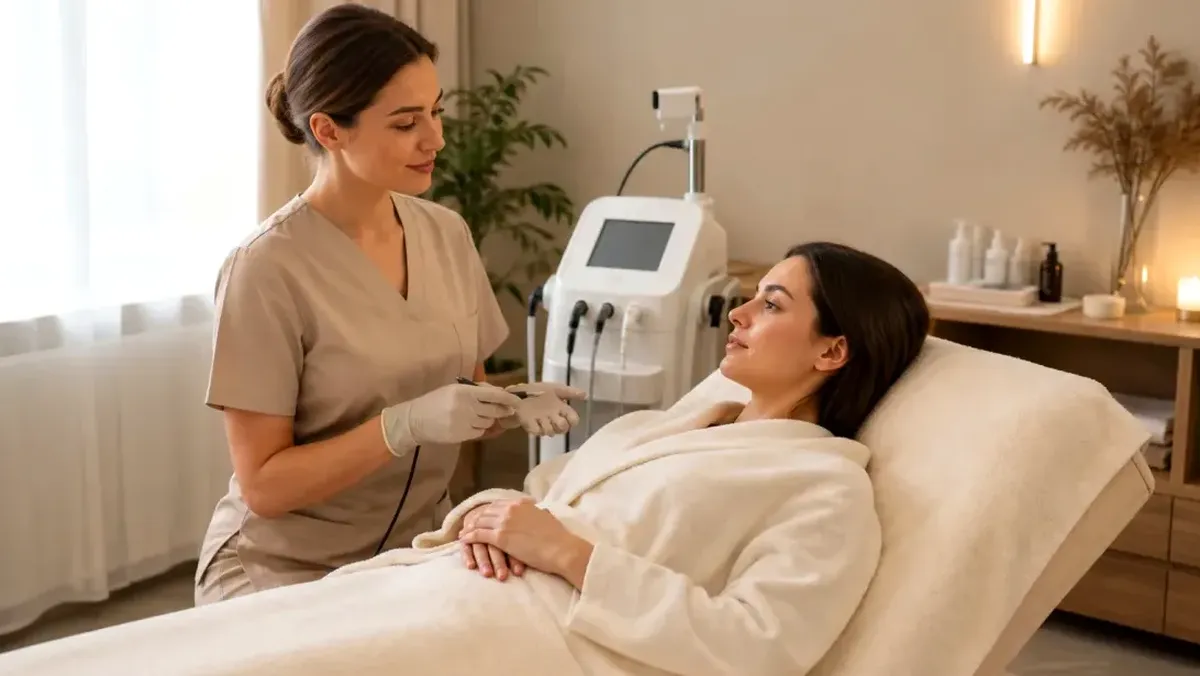
Quick answer
A few hairs around the nipples are a normal variation in women and men. Electrolysis removes them permanently by treating each follicle with a fine sterile probe, and it works on pigmented areola skin where laser is usually avoided. Sessions take minutes, and a short course of several visits is typical. A sudden increase in hair deserves a medical visit first.
Electrolysis for nipple hair is one of the quietest requests in my practice and one of the most common. A few dark hairs around the areola are normal for a large share of women, and for men as well. They are not a disorder and they do not need treatment. People choose to remove them for comfort and appearance, and electrolysis fits this area unusually well: there are only a handful of hairs, they tend to be coarse and stubborn, and the skin is too delicate for the repeated tweezing and shaving most people have been relying on for years.
This guide explains why hair grows around the nipples, when a change in that hair is worth mentioning to a physician, how a session on the areola actually goes, what it feels like, how many visits to expect, and how to choose an electrologist you will feel comfortable with. One point up front: if the hair growth increased suddenly, became dense, or arrived together with other body changes, a medical visit comes first. An electrologist removes the hairs that are there. Working out why they appeared is a doctor's job.
Why hair around the nipples is normal
The skin of the areola and the skin right around it contain hair follicles, like most of the body. In many people those follicles produce hairs so fine and pale that they are never noticed. In others, one or several follicles produce a darker, thicker hair. That shift is driven by androgens, hormones that everyone has in different amounts, and by how sensitive an individual's follicles are to them. Sensitivity is largely inherited, which is why nipple hair, like chin hair, often runs in families and is more visible in people with dark hair.
For women, the hairs tend to show up or change at times of hormonal movement: puberty, pregnancy, the months after childbirth, starting or stopping hormonal contraception, and the years around menopause. For many, there is no particular trigger at all. A few dark hairs simply appear in the twenties or thirties and stay. Clients are often convinced they are the only one. They are not. The topic is just rarely spoken about, so each person assumes it is rare and strange, when in the treatment room it is routine.
It helps to separate two situations. A handful of hairs around the nipples, stable over years, is an ordinary variation. Widespread coarse hair growth in a male pattern, on the face, chest, abdomen, and back, especially when it develops quickly, is a different picture and deserves medical attention. The first needs no treatment unless you want the hairs gone. The second calls for a conversation with a physician before or alongside any hair removal.
When to check with a physician first
Electrolysis answers an aesthetic request. It does not replace a medical evaluation in the cases where hair growth may reflect a change in hormone levels. An electrologist does not diagnose and does not assess your hormonal status, and a good one will never talk you out of seeing a doctor or suggest that removing the hair settles the question. If you have doubts about why the hair appeared, the sensible order is a medical visit first, then electrolysis as a cosmetic step if you still want it.
| What you notice | What it usually means | Reasonable next step |
|---|---|---|
| A few hairs, slowly appearing or stable for years | Typically a normal variation | Electrolysis if the hairs bother you |
| A clear increase in hair over a short time | Possible hormonal change | See a gynecologist, endocrinologist, or primary care physician |
| New hair together with irregular periods, acne, scalp hair thinning, or weight change | A pattern worth evaluating, for example for polycystic ovary syndrome | Medical visit before or alongside hair removal |
| Hair growth that began after starting a new medication | Possible medication effect | Ask the prescribing clinician |
| A lump, nipple discharge, skin dimpling, a rash, or a change in the nipple itself | Not a hair removal question at all | See a physician promptly |
If a medical evaluation shows that your hair growth has a hormonal cause, electrolysis remains an option. It permanently removes the hairs that are treated, whatever caused them. What it cannot do is change the hormones that may recruit new follicles later, which is why the two tracks work best together: your physician manages the underlying cause, and your electrologist takes care of the hair. I explain this in more depth in the guides on hormonal hair growth and electrolysis and PCOS and unwanted hair.
Embarrassment keeps many people away from both the doctor's office and the electrologist's. It should not. Physicians hear about body hair constantly, and for them it is a standard part of an appointment. An early visit, when one is truly needed, relieves worry faster than months of reading online. And when the answer is "this is normal for you", which it often is, you can move on to deciding what you want to do about the hairs with a clear head.
Why tweezing, shaving, and waxing work poorly here
Most clients arrive after years of tweezing. It seems logical for a few hairs, but the areola is thin, stretchy skin, and the hairs growing from it are often curved and deeply rooted. Plucking pulls on delicate tissue, can leave red bumps and small dark marks, and often breaks the hair below the surface, where it grows back as an ingrown. Plucking does not create new follicles, despite the common belief. But repeated trauma keeps the follicle irritated, and each regrown hair starts with a blunt, dark tip, which makes it look bolder than before.
Shaving is awkward and risky on a small curved surface, with nicks and razor bumps being the usual result, and the stubble is back within days. Waxing and sugaring pull on a broad patch of very sensitive skin for the sake of three or four hairs, and can bruise or lift it. Depilatory creams are strong chemicals that are not meant for this tissue. None of these methods is dangerous when done occasionally and gently, but none of them solves the problem, and all of them have to be repeated indefinitely.
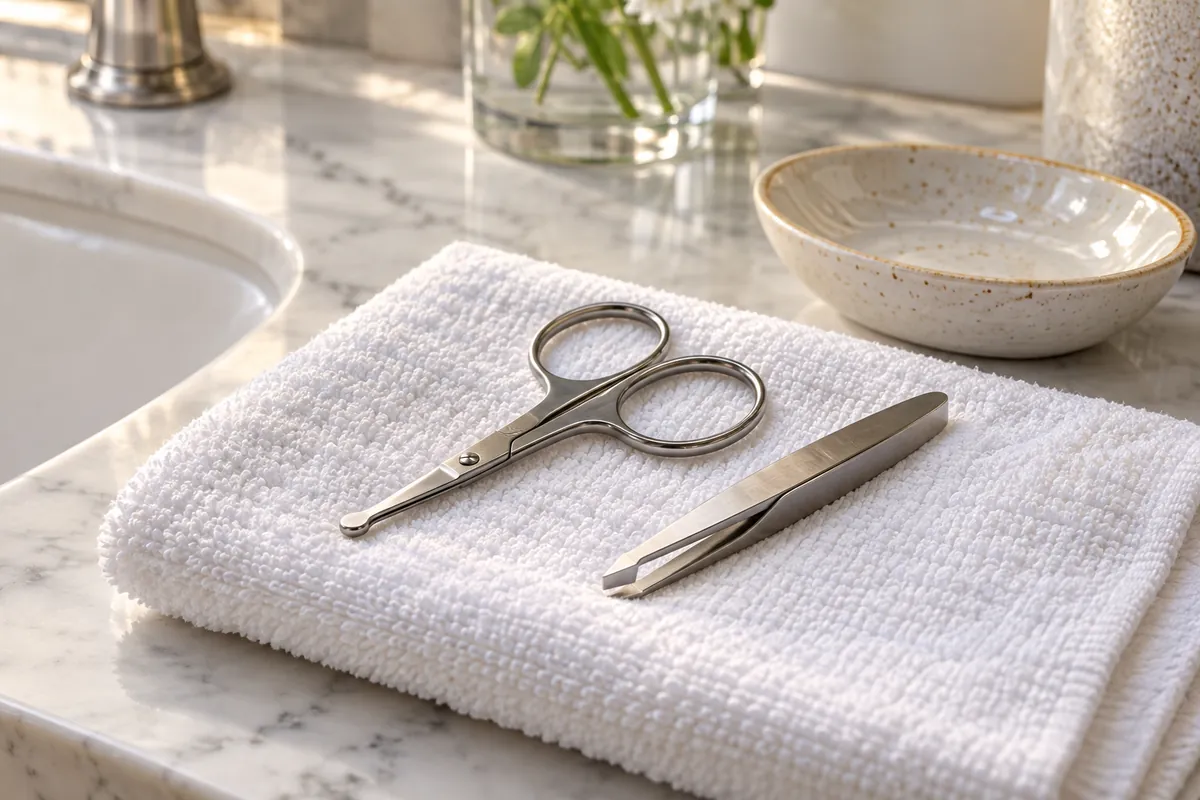
Trimming with small scissors is the gentlest temporary option, and it is the one I recommend to clients between sessions. It does not disturb the follicle, it leaves the hair in place for the next treatment, and it avoids ingrowns. Tweezing between sessions is the one habit I ask clients to drop completely, because a plucked hair is not available to treat and comes back on its own schedule. The comparison with plucking is laid out in my guide to electrolysis versus tweezing and threading.
Why electrolysis suits this area
Electrolysis treats one follicle at a time. A very fine sterile probe is placed into the opening of the follicle alongside the hair, a brief pulse of current is delivered at the base, and the cells that produce the hair are destroyed. Electrolysis is the only method the FDA recognizes for permanent hair removal. For the areola, where the task is a small number of individual hairs and not a field of growth, that one-by-one precision is exactly what is needed. The surrounding skin is not pulled, stripped, or exposed to a wide beam of light.
Laser hair removal is a poor match for this job. Lasers target pigment and are designed to cover areas with many dark hairs on lighter skin. The areola itself is pigmented skin, which raises the risk of the light being absorbed by the skin and causing a burn or a change in skin color, and many laser providers will not treat it at all. Laser is also unreliable on light, red, or gray hairs. Electrolysis works regardless of hair color or skin tone, including on the deeper pigment of the areola.
Because there are usually few hairs, treatment here is short compared with almost any other area. A session is often a matter of minutes. The total course is short as well, though it still involves several visits, since hairs grow in cycles and a follicle that is resting on the day of your appointment will produce its hair later. I come back to the timeline below.
What a session on the areola is like
A session starts with a conversation, in private, with the door closed. The electrologist explains the steps, looks at the area, and tells you how many hairs they see and how they plan to work. You undress only as much as is needed. In my room that means a wrap or gown that opens at the front, with one side uncovered at a time and the rest of you draped. Nothing about this should feel rushed or improvised. If a practitioner does not offer draping, ask for it.
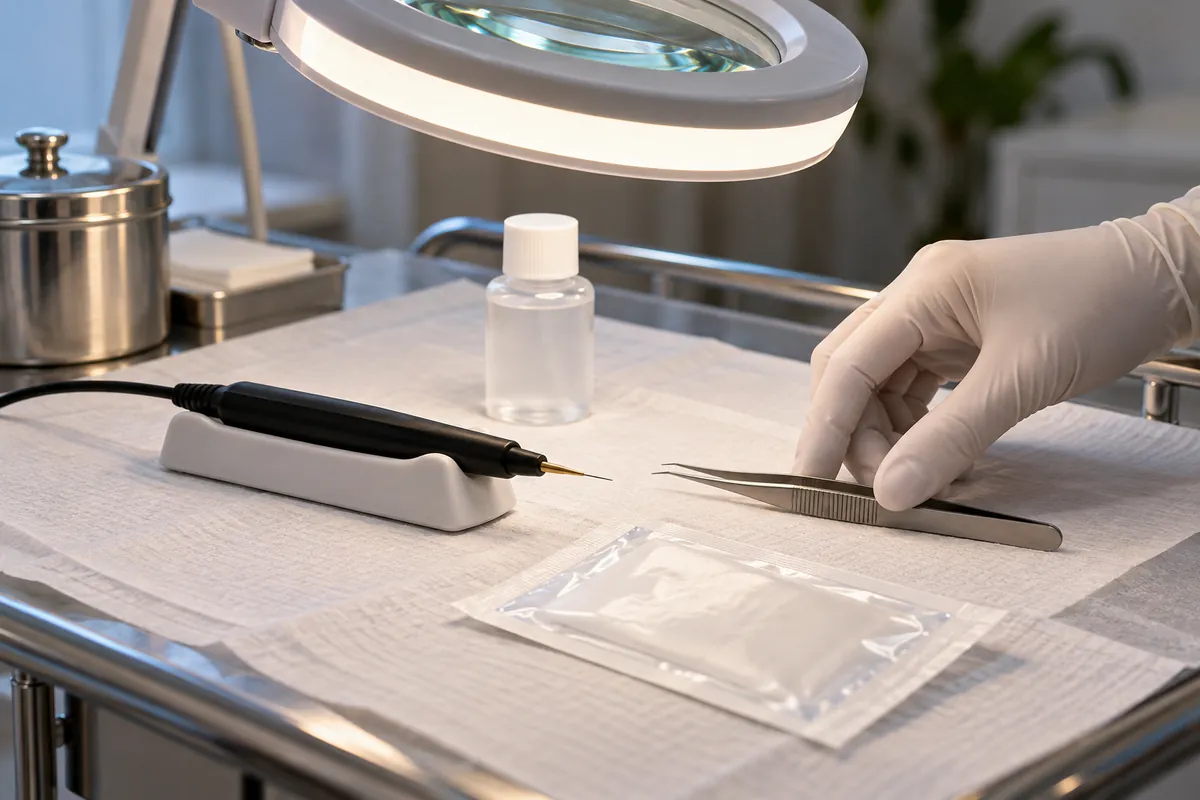
The skin is cleansed with an antiseptic. Under magnification and bright light, the electrologist holds the skin gently taut with one hand, slides the probe into each follicle along the direction of growth, applies current for a moment, and lifts the treated hair out with forceps. A correctly treated hair releases without tugging. Settings are chosen conservatively for this area and adjusted to your comfort. Because the work is a few individual hairs and not a patch of skin, the active treatment time is short, commonly minutes.
The areola has small natural bumps, the Montgomery glands, which are oil glands and a normal part of the anatomy. They are not blemishes and are not treated or squeezed. Some hairs grow right beside them, and a careful electrologist identifies the hair follicle itself and works only there. Hairs growing from a mole are a separate case: many electrologists want a physician's clearance before treating hair in a mole, and any mole that has changed should be seen by a dermatologist first.
You are in charge of the pace throughout. You can ask for a pause, ask a question, or end the session at any time, and in a practice that handles intimate areas this is standard and not an exception. A professional never pushes on to save time when a client is uncomfortable. If the first visit covers only a few hairs because that is what felt manageable, that is a perfectly good first visit.

Does electrolysis on the nipple area hurt?
The areola is a sensitive area with a rich nerve supply, so sensations here can register more sharply than on the legs or arms. Clients describe each insertion as a quick sting or a brief hot pinch. The saving grace is the scale: a handful of hairs means a handful of short moments, not a long session of continuous work. Modern epilators also allow precise control of intensity and timing, and for delicate areas a practitioner deliberately works at gentler settings.
How it feels varies from person to person and from day to day. The days before and during a period are often more sensitive, as are pregnancy and breastfeeding. Tiredness, stress, and too much caffeine can lower your tolerance. Some clients tell me afterward that it was milder than they had braced for. Others find it sharper than on the face. An experienced electrologist reads this and adjusts the rhythm, giving you a moment between hairs when you need it.
If you are anxious about comfort, say so at the consultation. Scheduling outside the premenstrual week, slow breathing, and short pauses go a long way. Topical numbing products are another option on some areas, but check with your electrologist and pharmacist before applying anything to the nipple area, and do not use them while breastfeeding without your physician's approval. What influences discomfort and how to reduce it is covered in my guide on whether electrolysis hurts.
How to prepare for your appointment
Very little preparation is needed, but a few details make the visit easier. The most important one is to stop tweezing. The electrologist needs the hair above the skin to follow the follicle, so for a couple of weeks before your first visit trim instead of plucking, and arrive with the hairs just long enough to be grasped with forceps. If you are not sure how long that is, ask when you book.
- Do not tweeze, wax, or sugar the area before your visit. Trim with small scissors if needed.
- Skip tanning, including tanning beds and self-tanner on the chest, for several days beforehand.
- Do not apply lotions, oils, perfume, or nipple balms to the area on the day.
- Wear a loose top and a soft, non-compressive bra or camisole that will not rub afterward.
- Tell your electrologist about medications that affect bleeding or healing, any skin condition or recent rash on the breast, nipple piercings, implanted medical devices such as a pacemaker, and whether you are pregnant or breastfeeding.
- Eat normally, drink water, and go easy on caffeine before the session.
Nipple piercings are compatible with treatment in most cases, but they need to be mentioned. A healed piercing is simply worked around, and with some types of current your electrologist may ask you to remove metal jewelry or will adapt the technique. A fresh or irritated piercing means waiting until it has healed. If you have had breast surgery, including augmentation, reduction, or reconstruction, let your electrologist know and wait until your surgeon has cleared you, since scars and healing skin are treated differently from intact skin.
Aftercare for the nipple area
After treatment, the skin around each treated follicle may be slightly pink and a little raised, like a small insect bite. On the areola this usually settles within hours and less often by the next day. A pinpoint crust can form on one or two spots and should be left to fall off by itself. Lasting marks are not expected when treatment is conservative and the area is left alone. If you are prone to dark marks after any skin irritation, tell your electrologist so the settings can be kept especially gentle.
For the first day, friction is the main thing to avoid. Wear soft, breathable cotton, skip tight sports bras and lace or underwire that presses on the treated spot, and avoid sleeping on your chest if that is comfortable for you. Hold off on hard workouts, saunas, steam rooms, hot tubs, pools, and tanning for a day or two, and keep scrubs, fragranced body products, and exfoliating washes away from the areola until the skin has settled. Clean hands only, and no picking.
If your electrologist recommended a soothing product, use it as directed, thinly. If you notice redness that grows instead of fading, increasing soreness, warmth, swelling, pus, or any discharge from the nipple, contact your electrologist and see a physician. The complete routine is in my electrolysis aftercare guide, and if your skin tends to overreact in general, the guide to electrolysis for sensitive skin explains how sessions are adapted.

How many sessions it takes
Because most people have only a few hairs here, the course is much shorter than for a large body area. It is still a course and not a single visit. Every hair goes through phases of growth, rest, and shedding, and on any given day some follicles are resting with no hair to treat. Those hairs surface over the following weeks and months and are treated as they appear. Hairs that have been tweezed for years can also have strong, distorted follicles that need more than one treatment before they stop producing.
In practice this means a few short visits spread over several months, with the interval set by how quickly your hair returns. I do not give a universal number, because it does not exist. It depends on how many follicles are involved, how coarse the hairs are, your history of plucking, and your hormones. After an initial look, an electrologist can give you a realistic range for your case. The general logic is explained in my guide on how many sessions electrolysis takes.
Realistic expectations matter. One visit may not remove every hair you have ever seen in the area, especially if new follicles become active after the first treatment. That is the normal course of things, not a sign that the method is failing. And years after a successful course, an occasional new hair can appear from a follicle that was never active before, usually at a time of hormonal change. That is handled with one quick visit, not by starting over.
Cost follows the same logic as time. Electrologists generally charge by the length of the appointment, and work on a few areola hairs usually fits into the shortest slot a studio offers. Some clients combine it with another small area, such as the chin or the line below the navel, in the same visit, which is an efficient way to use the appointment. Ask at the consultation how the studio bills short sessions and whether there is a minimum, so there are no surprises. I do not quote figures here, because rates differ widely between regions and practitioners.
Pregnancy, breastfeeding, and changes with age
Hormones shift across a woman's life, and nipple hair can shift with them. In the teenage years, while cycles are settling, individual hairs can appear without any pattern. During pregnancy, many women notice new or darker hairs on the breasts and abdomen, and a good part of that growth often fades in the months after delivery. Around menopause, as the hormonal balance changes again, hairs around the areola can become more noticeable. All of this sits within the range of ordinary change.
Pregnancy and breastfeeding call for extra care. The breasts are more sensitive and the tissue is changing. Many electrologists do not treat the breast area during pregnancy, and many obstetric providers advise holding off on elective treatments there. While breastfeeding, the nipple and areola are in constant use and the risk of irritation is higher. My advice is to trim, wait, and see what remains once hormones have settled after pregnancy and nursing. If you want treatment sooner, get your physician's agreement first. More detail is in my guide to electrolysis and pregnancy.
Understanding these phases takes some of the alarm out of finding a new hair. It is not a malfunction. It is the body responding to its own hormones in the way it is built to. Electrolysis remains a working tool at any stage of adult life, since it removes hair that has already grown regardless of the hormonal background it grew in.

Electrolysis for nipple hair in men
Men ask about this area too, usually as part of chest grooming or because a ring of coarse hair around the nipple bothers them when the rest of the chest is sparse. The principles are the same, with two differences. Men generally have more hairs in the area and coarser ones, so sessions are longer and the course involves more visits. And many men have been shaving the chest, which leaves blunt stubble and razor bumps, so it helps to let the hair grow out a little before the first appointment.
Some men want a few hairs removed and the rest left natural, and electrolysis handles that selective work well, since each follicle is chosen individually. Trans and nonbinary clients also request treatment in this area, sometimes in connection with chest surgery, and in that case timing should be coordinated with the surgeon. Whoever the client is, the same standards of privacy, draping, and unhurried consent apply. My broader guide to electrolysis for men covers typical areas and expectations.
How to choose an electrologist for an intimate area
Work on the areola takes technical skill and tact, and not every practitioner who is confident with legs or a chin is equally at ease with intimate areas. Ask plainly whether the electrologist treats the breast area and how often. Notice how they talk at the consultation. A professional answers without awkwardness, explains the process without unnecessary detail, and does not change the subject. For them it is ordinary work, and that matter-of-fact tone is what makes clients relax.
Look at hygiene: a new sterile single-use probe opened in front of you, gloves, a clean covered table, and cleansed skin before and after. Check credentials as well. States regulate electrology differently. Many require a license with set training hours, and some do not regulate the profession, which leaves more of the vetting to you. You can look up your state on the electrolysis licensing hub.
It is entirely reasonable to ask for a practitioner of a particular gender, to ask who else will be in the room, and to bring someone with you to the consultation. A good electrologist never pressures a client to continue and will offer to pause or reschedule if you are uneasy. Trust your own read as well. If something about the room or the conversation feels off, look for someone else. There is no shortage of professionals who handle this area calmly and respectfully.

Common myths about nipple hair
"Only women with a health problem have hair there." No. Isolated hairs around the areola are common in healthy women at every stage of life. The silence around the subject is what makes it seem unusual. "If I pluck one, two will grow back." Plucking does not multiply follicles and does not change your hormones. The impression comes from blunt regrowth, from irritation, and from neighboring follicles that were going to become active anyway. "Shaving makes it thicker." Shaving cuts the hair at its widest point, so the stubble feels coarse, but the follicle is unchanged.
"It is too embarrassing to bring up." Electrologists who work with intimate areas hear this request regularly. For us it is a working situation like any other part of the body, and after the first few minutes of a consultation most clients say the topic stops feeling awkward. Putting it off only extends the years of tweezing. "Electrolysis will damage the nipple or affect breastfeeding later." Electrolysis acts on the hair follicle in the skin. Properly performed, it is not directed at the milk ducts or the nipple itself. If you have specific concerns about future breastfeeding, raise them with your physician and your electrologist before starting.
A few specific questions make the first visit easier. Ask how much experience the electrologist has with this area, how many hairs they see on inspection, what sensations to expect, and how many visits they would estimate in your case. Ask how you will be draped and whether you can stop at any point. Mention anything particular about your skin: sensitivity, a tendency to dark marks or raised scars, recent rashes, piercings, or surgery. All of this lets the practitioner choose settings and plan the session around you.
That open conversation builds trust, and trust has a direct effect on how the session feels. Clients who have voiced their questions and worries in advance almost always tell me the treatment itself was easier than they expected. If you are a student of electrology, take note of how much of this visit is communication. Technique on a delicate area is taught through supervised practice, and the theory behind it, including skin anatomy, hormones, and client consultation, is part of any serious electrolysis program.

The bottom line
A few hairs around the nipples are a common, normal feature of the human body, not a reason for alarm or self-diagnosis. If they bother you, electrolysis offers a precise, permanent solution in an area where tweezing and shaving perform poorly and irritate delicate skin. Sessions are brief, the course is short compared with larger areas, and with a careful practitioner the skin settles within hours. If the hair growth has changed quickly or comes with other symptoms, a medical visit is the first step, and electrolysis follows as a cosmetic complement.
Your next step is small. Put the tweezers away and switch to trimming, so the hairs are present and treatable. Then book a consultation with a licensed or certified electrologist who works with intimate areas, ask the questions above, and decide at your own pace. Most clients tell me afterward that the hardest part was making the first call.

State Requirements
State licensing guides
Hours, exams, fees, and the licensing board differ by state. Open your state for the current requirements.
Looking for a practitioner or a program near you? Browse electrologists by state and city or beauty schools by state.
Common Questions
FAQ
Yes. The skin around the areola contains hair follicles, and in many women and men a few of them produce dark, visible hairs. The hairs often appear or change during puberty, pregnancy, and the years around menopause, or with no obvious trigger. A small number of hairs that have been stable over time is a normal variation and needs no treatment unless you want them removed. A sudden, marked increase is the situation to mention to a physician.
When performed by a trained electrologist using sterile single-use probes and conservative settings, electrolysis is a suitable method for individual hairs around the areola. It treats each follicle directly and does not depend on skin or hair color, which matters because the areola is pigmented and many laser providers will not treat it. Tell your electrologist about piercings, surgery, implanted devices, pregnancy, and breastfeeding before the session, and see a physician first about any lump, discharge, or skin change.
The area is sensitive, so each insertion can feel like a sharp, brief sting. Because there are usually only a few hairs, the discomfort is limited to a handful of short moments. Electrologists use gentler settings for delicate areas and pause whenever you ask. Sensitivity is often higher before a period, so timing your visit for the week after can help. More ways to stay comfortable are in the guide on whether electrolysis hurts.
Fewer than for larger areas, but more than one. Hairs grow in cycles, so some follicles have no hair to treat on the day of your visit and surface later. Most clients need a few short visits spread over several months. The exact number depends on how many follicles are involved, how coarse the hairs are, how long you have been tweezing, and your hormones. An electrologist can estimate a range after looking at the area.
You can, and occasional gentle tweezing is not dangerous, but it is a poor long-term answer. The skin is delicate, plucked hairs often break and become ingrown, and repeated plucking leaves bumps and dark marks. It also has to be repeated indefinitely. If you plan to have electrolysis, stop tweezing and trim with small scissors instead, because a plucked hair cannot be treated until it grows back.
This area is usually postponed. Breast tissue is more sensitive and changing during pregnancy, many electrologists do not treat the breasts at that time, and during breastfeeding the nipple area is prone to irritation. Hair that appears in pregnancy often decreases afterward on its own. Trim in the meantime, and talk to your physician if you want treatment sooner. See the guide to electrolysis and pregnancy for the general picture.
With careful technique and appropriate settings, lasting marks are not expected. Slight pinkness and small raised dots are typical for a few hours, and an occasional pinpoint crust falls off on its own within days. The risk of marks rises with picking, friction from tight clothing, sun exposure on healing skin, or overly aggressive treatment. If you tend to form dark spots or raised scars, mention it so your electrologist can start even more conservatively.
Laser targets pigment and is designed for areas with many dark hairs. The areola is darker, pigmented skin, which increases the chance that the skin itself absorbs the light and burns or changes color, so many providers avoid it. Laser also performs poorly on light, red, or gray hairs and on isolated single hairs. Electrolysis treats each follicle individually, whatever its color, which makes it the better fit for a few hairs on delicate skin.
Keep Reading
Related Guides


