Cosmetology
Buccal Massage: What It Is, Results, Risks and Who Can Do It
Quick answer
Buccal massage is a facial massage in which the practitioner works the cheek and jaw muscles from two sides, with one gloved finger inside the mouth and the other hand outside. It can relax a clenched jaw and reduce puffiness for a while. It does not move bone, remove fat, or produce a permanent lift.
Buccal massage is a facial massage technique in which the practitioner works on the cheek and jaw muscles from two sides at once: one gloved finger or thumb inside the mouth, the other hand on the outside of the face. The name comes from the Latin word for cheek. Clients usually find it through social media videos that promise sculpted cheekbones, and they arrive at my treatment room with a mix of curiosity and doubt. Both reactions are reasonable. The technique is real, it feels unlike any other facial, and it does change how a tense face looks and feels. It also has limits that the videos rarely mention.
I have worked with faces for more than twenty years, and I treat buccal massage as muscle work first and a beauty service second. This guide explains what happens in a session, what results are realistic, who should skip it, how often to book, and how to choose a practitioner who is legally allowed and properly trained to work inside the mouth. If you are a beauty student or a licensed professional thinking about adding the service, I also cover the scope of practice questions you need to settle with your state board before you put it on a menu.
What buccal massage is and how it works
In a standard facial massage, the hands glide over the skin and press the soft tissue against the bone underneath. That works well on the forehead, where there is bone directly behind the muscle. The cheeks are different. Between the cheekbone and the jaw there is a pocket of soft tissue with nothing firm behind it, so pressure from outside simply pushes the cheek into the mouth. Buccal massage solves this by placing a finger inside the cheek. The muscle is then held between two hands, and the practitioner can knead, stretch, and release it in a way that outside work cannot reach.
The main targets are the chewing muscles and the muscles of expression around the mouth. The masseter, the thick muscle you feel bulging at the angle of the jaw when you clench your teeth, is usually the star of the session. The buccinator, the flat muscle that forms the wall of the cheek, and the muscles that lift the corners of the mouth also get attention. Some trained practitioners reach the pterygoid muscles deeper in the jaw, which is advanced work and one reason training matters so much. None of this involves the teeth, the gums as a treatment target, or anything that belongs to dentistry.
It helps to know where the technique sits among other services. It is manual work with no devices, no needles, and no products that change the skin chemically. It is closer to massage therapy than to a classic clean-up facial, and many practitioners blend it into a longer sculpting facial that also includes neck, shoulder, and scalp work. The intraoral part usually takes only a portion of the appointment. If a menu lists a very short session and calls it buccal massage, ask what is included, because warming up the outside tissue first is part of doing it properly.
Facial muscles behave like muscles anywhere else in the body. When they are overworked, they shorten, thicken, and hold tension even at rest. People who clench or grind their teeth, chew gum for hours, or carry stress in the jaw often have masseters that feel like firm cords. A tight masseter can make the lower face look wider and heavier than the bone structure underneath, and it can pull on the tissue around the mouth. Slow, sustained pressure and stretching encourage the muscle to let go, and when it does, the lower face often looks softer and slightly narrower.
The second effect is on fluid. The face holds water easily, especially in the morning, after salty food, after alcohol, or after a long flight. Massage moves fluid through the soft tissue toward the lymph nodes near the ears and down the neck, and the face looks less puffy for a while. This is the part of the result that shows up most clearly in before and after photos taken the same day. It is real, and it is temporary. The body redistributes fluid again within hours to days, depending on the person and on habits like sleep and salt intake.
The third effect is circulation and sensation. Kneading warms the tissue, the skin flushes lightly, and many clients say their face feels awake and light afterward, as if they had taken off a tight mask. That feeling is one of the reasons people rebook. I am careful about how I describe the rest. Well-designed clinical research on buccal massage specifically is thin, so claims about rebuilding collagen, permanently lifting the face, or replacing injectables are marketing, not established science. I tell clients what I can stand behind: relaxed muscles, less puffiness, and a face that moves more freely.
What happens during a session, step by step
A proper appointment starts with a conversation, not with hands. I ask about jaw clicking or locking, recent dental work, cold sores, fillers, botulinum toxin injections, braces or aligners, latex allergy, and any medical condition that affects the face or mouth. I also ask what the client hopes to see. Someone who wants relief from a clenched jaw and someone who wants sharper cheekbones for an event need different conversations. The intake takes a few minutes and it protects both of us. If a practitioner skips it and goes straight to the table, that tells you something about the rest of their standards.
Next comes cleansing and a warm-up on the outside. The skin is cleaned, a small amount of slip is applied, and the practitioner works the neck, the area around the collarbones, the jawline, the cheeks, and the temples with classic massage strokes. This stage opens the drainage pathways and warms the muscles so they accept deeper work. Many clients are surprised that a third or more of the appointment happens before anything goes inside the mouth. That order is intentional. Going straight to deep intraoral pressure on cold, guarded muscles is uncomfortable and far less effective.
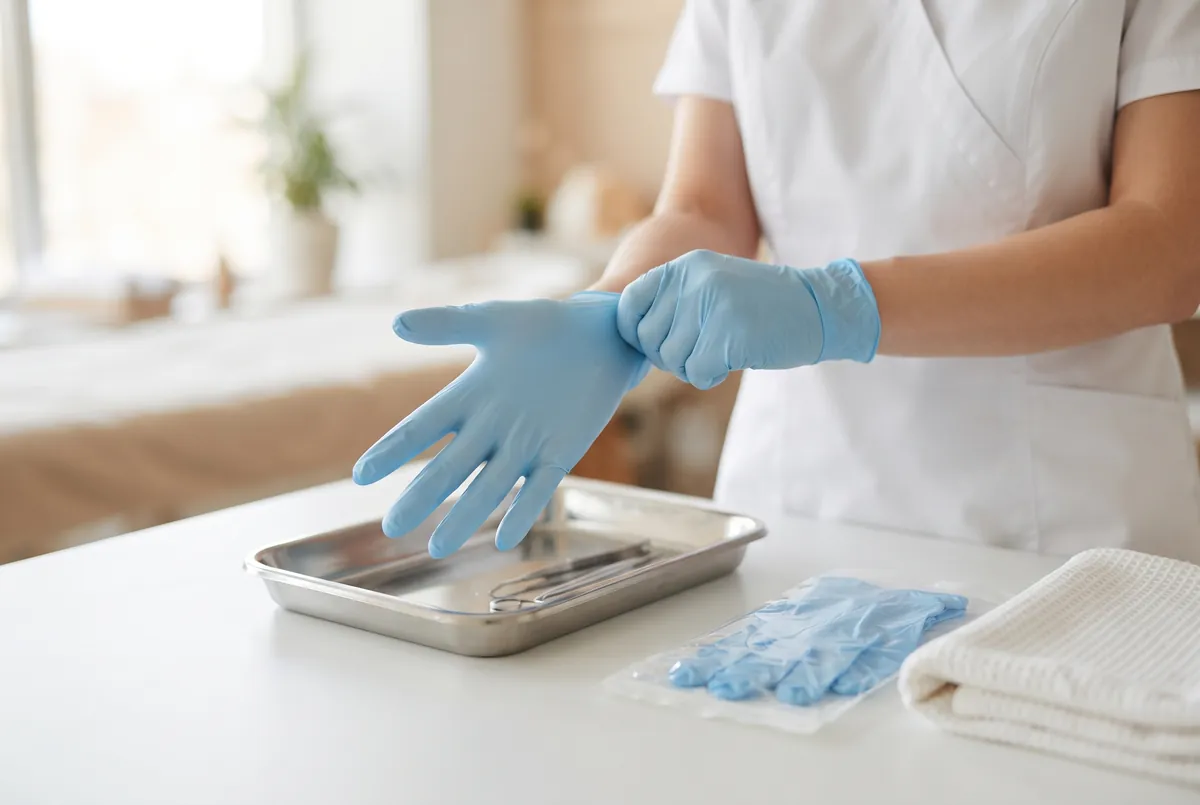
For the intraoral part, the practitioner washes hands and puts on a fresh pair of gloves in front of you. You may be offered a rinse first. One finger or thumb slides between the cheek and the teeth, never between the teeth, while the other hand supports from outside. The work moves slowly: pinching and rolling the cheek wall, pressing into the masseter and holding until it softens, stretching the tissue around the corners of the mouth and under the cheekbone. One side is finished before the other, and the gloves are changed if anything other than your mouth is touched in between.
The session closes with calmer strokes on the outside again, often with scalp or neck work, then a moisturizer and sunscreen if you are heading into daylight. You will be handed a tissue, because the mouth produces extra saliva during the inside work, which is completely normal. A good practitioner checks in about pressure throughout and gives you a simple signal, such as raising a hand, since talking with a finger in your cheek is not practical. You should feel in control of the intensity at every moment.
What it feels like during and after
Most first-time clients describe the inside work as strange for the first minute and then surprisingly pleasant. The sensation is deep pressure, similar to a firm sports massage on a tight shoulder. On a masseter that has been clenching for years, some spots are tender, and that tenderness usually fades as the muscle releases under steady pressure. Sharp, electric, or pinching pain is not part of the technique. If you feel it, say so right away. Pressure can always be reduced, and a skilled practitioner would much rather adjust than push through your discomfort.
People with a strong gag reflex often worry about this service more than they need to. The finger stays in the cheek pocket and does not go toward the throat, so the reflex is rarely triggered. Breathing slowly through the nose helps. Clients also ask whether it is awkward. It can feel that way at the start, the same way a first dental cleaning or a first massage feels unfamiliar. A calm practitioner who explains each step before doing it removes most of that awkwardness within a few minutes.
Afterward, the face usually feels warm, loose, and light. Mild redness fades quickly. Some people feel sleepy, the way they do after a body massage. The jaw muscles can feel tender the next day, like legs after an unfamiliar workout, and that passes on its own. Bruising is uncommon and more likely in people who bruise easily or take blood-thinning medication. Lasting pain, numbness, swelling that grows, or difficulty opening the mouth are not normal reactions, and they are reasons to contact a physician or dentist.
Realistic results, how long they last, and who benefits
Right after a session, most clients see a face that looks rested: less swelling under the eyes and along the jaw, cheeks that sit a little higher because the tissue is not weighed down by fluid, and a softer set to the mouth. The visible change is modest when judged honestly in neutral light. Dramatic transformations online usually involve a different camera angle, different lighting, or a deliberately puffy before photo taken first thing in the morning. I ask clients to judge by how the face feels and moves, and by a plain mirror, not by filtered video.
How long the effect holds depends on what created the tension or puffiness. The depuffing part typically fades within days. The muscle relaxation can last longer, particularly when sessions are repeated and the client also works on the cause: clenching, poor sleep, a habit of resting the chin on a hand, or hours spent with the jaw pushed forward at a screen. Without those changes, the muscles return to their old pattern. That is not a failure of the technique. It is how muscles respond to daily habits, and it is why I frame the service as maintenance.
Clients also ask whether a series can slim the face. If the lower face looks wide because the masseters are overdeveloped from clenching, releasing them regularly can make that area look softer. If the width comes from bone structure or from fat, massage will not change it. I say this plainly during the consultation, because a client who expects a surgical result from a manual service will be disappointed no matter how skilled the work is. Clear expectations are part of the treatment.
In my practice, the clients who love this service fall into a few groups. The first is people who hold stress in the jaw: they wake up with tight cheeks, notice themselves clenching at a desk, or have been told by a dentist that they grind at night. The second is people who retain fluid in the face and want to look fresher before an event or after travel. The third is clients who already enjoy facial massage and want deeper work than gliding strokes provide. Performers, teachers, and others who speak for a living often appreciate how much freer the mouth feels afterward.
It can also fit well into a broader skin care routine. Relaxed muscles and good circulation do not replace cleansing, sun protection, or professional treatments, but they complement them. If you are new to professional skin care altogether and want to understand how massage fits with cleansing, exfoliation, and masks, my overview of what a professional facial care appointment includes gives the bigger picture. Buccal work is an addition to that foundation, not a substitute for it.
Who should skip it or wait
Because the practitioner's finger is in contact with the lining of the mouth, the list of reasons to postpone is longer than for an ordinary facial. Some are temporary and simply mean rescheduling. Others call for clearance from a physician or dentist. A careful practitioner will ask about every item below, and you should volunteer anything that applies even if you are not asked.
- Active cold sores or a history of frequent outbreaks: pressure and stretching around the lips can trigger or spread an outbreak, so wait until the skin is fully clear.
- Mouth ulcers, cuts, gum infections, or any open lesion inside the mouth: broken tissue is an infection risk for both client and practitioner.
- Recent dental work: extractions, implants, root canals, and oral surgery need healing time, and your dentist decides when massage is safe.
- Recent injectables: after filler or botulinum toxin in the lower or mid face, follow the injector's instructions on when firm massage is allowed.
- Diagnosed jaw joint disorders: get a medical opinion first, since the wrong pressure can aggravate the joint.
- Active acne cysts, rashes, sunburn, or skin infections on the cheeks: manipulation spreads inflammation and hurts.
- Fever, a cold, flu, or any contagious illness: reschedule, for your comfort and for the practitioner's safety.
- Blood-thinning medication or a bleeding disorder: bruising is more likely, so ask your physician and tell the practitioner.
- Facial nerve conditions, recent facial surgery, or cancer treatment: written medical clearance comes first.
- Latex allergy: not a reason to skip, but the practitioner must use nitrile or another latex-free glove.
Braces, aligners, and retainers deserve a separate mention. Removable aligners and retainers come out before the session. Fixed braces make the inside of the cheek more vulnerable to scraping, so many practitioners either decline the intraoral part or work very lightly. Loose teeth, new piercings in the lip or cheek, and a recently placed crown that still feels sensitive are all worth mentioning. Pregnancy is not an automatic barrier, but positioning and comfort change, and I recommend checking with your prenatal care provider if you have any doubts.

Hygiene standards you should expect
Intraoral work raises the hygiene bar well above that of a regular facial. The practitioner should wash hands thoroughly and put on new, single-use, medical-grade gloves immediately before going inside your mouth, in your sight. The gloves should be powder-free and unflavored, and latex-free if you have any sensitivity. Once gloved, those hands should not touch a phone, a drawer handle, a product jar, or hair. If they do, the gloves come off and a new pair goes on. This is the single easiest thing for a client to watch, and it tells you almost everything.
The rest of the room matters too. Linens and headbands should be fresh for each client, the table covering changed, and product dispensed with a spatula or pump instead of fingers dipped into a jar. Used gloves and tissues go straight into a lined, covered bin. The practitioner should have short, smooth nails, since a long or sharp nail under a glove can tear it and scratch the cheek lining. A practitioner with a visible cold sore, a cough, or a cut on a hand should not be doing intraoral work that day.
Do not be shy about asking questions before you book. Ask what gloves are used, whether they are changed between the two sides if anything else is touched, and how the room is cleaned between clients. A professional answers these without irritation. In the United States, sanitation rules for licensed beauty and massage professionals are set by state boards, and a licensed practitioner has been trained and tested on infection control. That training is one of the practical reasons to choose a licensed provider over someone who learned from a weekend video.
Who can legally perform buccal massage in the US
This is the question beauty professionals ask me most, and the honest answer is that it depends on the state. Massage therapists, estheticians, and cosmetologists each work under a scope of practice written by their own state board. Facial massage on the outside of the face is within esthetics and cosmetology scope across the country. Work inside the mouth is treated differently from state to state. Some boards regard it as massage therapy, some require a specific intraoral endorsement even for licensed massage therapists, and some have not addressed it in writing at all.
If you are a client, the practical step is simple: ask the practitioner what license they hold and whether intraoral work is within that license in your state. You can verify any license on the state board's website. If you are a professional, do not rely on what a course seller tells you. Contact your board in writing and keep the reply. A certificate from a buccal massage workshop teaches technique, but it does not expand what your license permits. You can find board contacts and requirements by profession on our esthetician licensing pages by state and the matching cosmetology licensing hub.
Liability insurance is the other half of this. Many professional policies cover only services that fall inside the insured person's legal scope. If a client is injured during a service your state does not allow under your license, you may find yourself without coverage. Before adding buccal massage to a menu, confirm scope with the board, confirm coverage with the insurer, and get hands-on training from an instructor who teaches anatomy of the jaw and mouth, not just a sequence of moves.
Buccal massage compared with other facial techniques
Clients often mix up several services that sound similar. Sculptural or sculpting facial massage usually refers to deep, firm external work on the muscles of the face, and many sculpting protocols include a buccal segment in the middle. Lymphatic drainage massage is the opposite in pressure: very light, slow, rhythmic strokes aimed at fluid, with no deep kneading. Gua sha and facial cupping use tools on the outside of the skin. A classic relaxation facial massage is gentle gliding and tapping as one step in a longer facial.
| Technique | Where the hands work | Pressure | Main purpose |
|---|---|---|---|
| Buccal massage | Inside the cheek and outside the face together | Medium to deep | Release of cheek and jaw muscles, depuffing |
| Sculpting facial massage | Outside, often with a buccal segment | Deep | Muscle tone and tension, defined contours |
| Lymphatic drainage | Outside, face and neck | Very light | Reducing fluid retention and puffiness |
| Gua sha or cupping | Outside, with a tool | Light to medium | Circulation, fluid movement, relaxation |
| Classic facial massage | Outside, as one facial step | Light | Relaxation and product absorption |
People also compare buccal massage with injectables. Botulinum toxin in the masseter is a medical procedure that reduces the muscle's ability to contract for months, and filler adds volume. Massage does neither. It relaxes a muscle that is still fully able to work, which is why its effect is gentler and shorter. Some clients use massage because they do not want injections, and others combine the two under their injector's guidance. That decision belongs to the client and a medical provider, and I never position massage as a replacement for medical care.
How often to book, how to prepare, and aftercare
There is no clinically proven schedule, so I plan by response. For a client with a visibly tight jaw, I suggest a short series spaced about a week apart, then I reassess. If the muscles are softer and the client notices less clenching, we stretch the gap and move to maintenance, often around once a month. For someone who wants a fresher look for a single event, one session a day or two beforehand is enough, as long as they have tried the service at least once earlier and know how their face reacts.
Be cautious about large prepaid packages sold at the first visit. A practitioner cannot know how your muscles will respond until they have worked on you once or twice. A fair approach is a single session, an honest conversation about what changed, and a plan that can be adjusted. More is not better either. Daily deep work on the jaw can leave the muscles sore and irritated. Tissue needs time between sessions to settle, just as it does after a strong body massage.
Preparation is light. Brush and floss beforehand, the way you would before a dental visit, and avoid a heavy meal in the hour before so that pressure on the jaw feels comfortable. Skip strong mouthwash right before the session if your mouth is sensitive. Arrive without heavy lip products. If you wear removable aligners or a retainer, bring the case. Men with a full beard can still have the service, though external strokes glide better over short or freshly trimmed facial hair.
Plan the timing around other treatments. Leave space after dental appointments, chemical peels, laser treatments, and facial waxing so that the skin and the mouth are calm. If you have had filler or botulinum toxin, ask your injector for a specific waiting period and tell the massage practitioner the date and area. If you are prone to cold sores, mention it when you book, not when you are already on the table. Your practitioner may suggest postponing if you feel the familiar tingling that comes before an outbreak.
Come ready to speak up. Decide in advance that you will use the hand signal if pressure is too much, and tell the practitioner about any area that is off limits. Clients who stay silent through discomfort tend to tense the very muscles we are trying to release, which makes the work less effective. The session is a collaboration, and the best results come when the client breathes slowly, lets the jaw hang heavy, and gives feedback.
Aftercare is mostly about not undoing the work. Drink water, eat normally, and avoid very chewy or hard foods for the rest of the day if your jaw feels tender. Skip gum. Try not to clench, and notice the moments when you do: in traffic, at the keyboard, during a workout. A warm compress on the jaw can ease next-day soreness. If the inside of a cheek feels slightly rough, it usually settles within a day, and a mild saltwater rinse is soothing.
For the skin, keep things gentle that evening: a mild cleanser, a simple moisturizer, and sunscreen the next morning. Postpone strong exfoliating acids and retinoids until the following day if your skin is flushed. Alcohol and very salty food bring puffiness right back, so clients who want to keep the fresh look for an event should go easy on both. Sleeping on your back with the head slightly raised that night also helps the face stay less swollen in the morning.

Can you do buccal massage on yourself at home
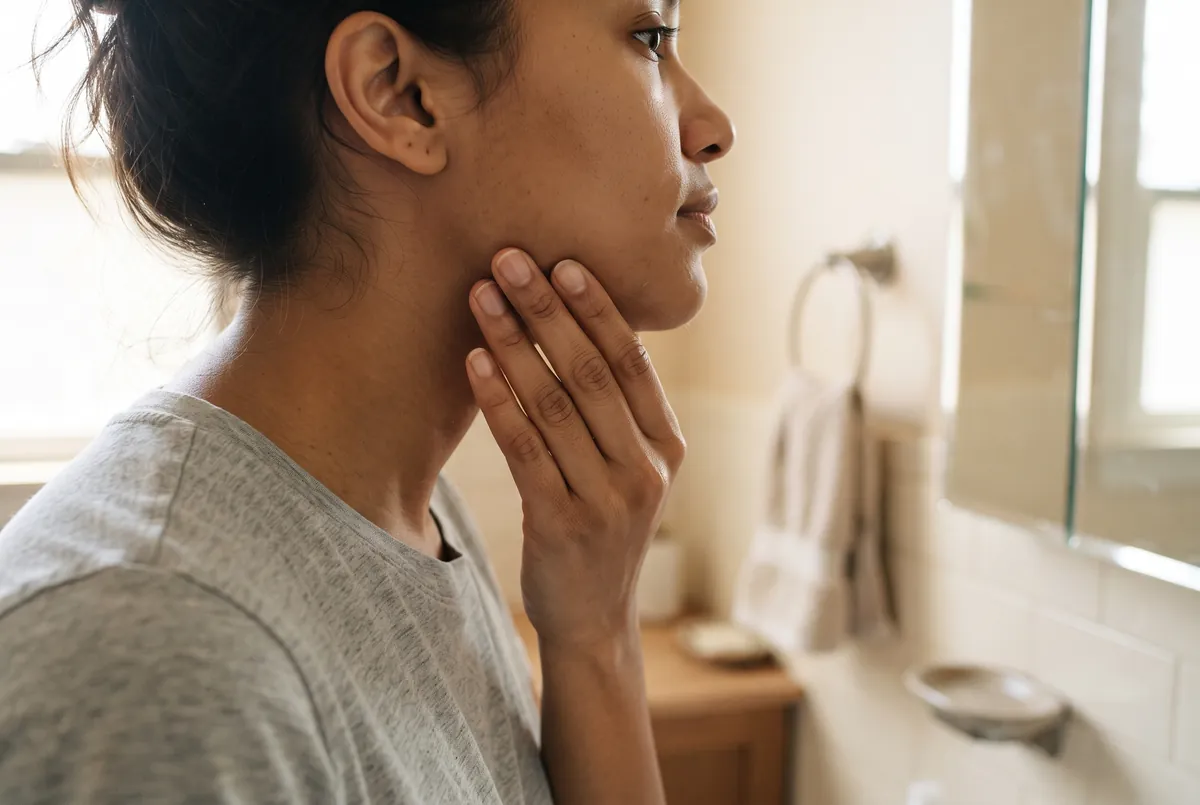
You can do a useful amount of jaw care at home, mostly from the outside. With clean hands and a little moisturizer or oil for slip, place your fingertips or knuckles on the masseter, just in front of the ear lobe and above the jaw angle, and make slow circles with moderate pressure. Then glide from the corners of the mouth toward the ears and down the sides of the neck. A minute or two per side in the evening is plenty. This is safe for most people and keeps the muscles from tightening back up as quickly.
Intraoral self-massage is where I advise caution. People do it, and with very clean hands, short nails, and gentle pressure, lightly pinching and rolling the cheek between a thumb inside and fingers outside is unlikely to cause harm in a healthy mouth. The problems start when someone copies deep professional moves from a video without knowing where nerves, salivary ducts, and the jaw joint are. It is hard to judge pressure on your own face, and it is easy to scratch the cheek lining. If you want to try, keep it shallow, slow, and brief, and stop at any sharp pain.
Self-massage also cannot replicate the main advantage of a professional session, which is being fully relaxed while someone else does the work. When you massage your own jaw, your arm, shoulder, and neck muscles are active, and the jaw rarely lets go completely. I suggest treating home care as maintenance between appointments and leaving the deep work to a trained professional. Avoid every home attempt during a cold sore, a mouth ulcer, or after dental work.
How to choose a practitioner
Start with the license. Ask what it is, look it up on the state board site, and ask directly whether intraoral massage is within its scope in your state. Then ask about training: where they learned the technique, how many hours were hands-on, and whether the course covered anatomy and contraindications. A confident, specific answer is a good sign. Vague answers, or a claim that no license is needed because it is "just massage," are reasons to keep looking.
Next, look at how they communicate. A professional conducts an intake, explains what will happen before it happens, sets up a signal for pressure, and describes results in measured terms. Be wary of anyone who promises a nonsurgical facelift, guarantees a specific change, diagnoses a jaw disorder, or pressures you into a package on the first visit. The same judgment applies when choosing any skin care provider, and my guide on how to choose a cosmetologist you can trust lists the questions I would ask in your place.
Finally, trust what you observe in the room. Clean linens, gloves put on in front of you, short nails, a tidy workstation, and a practitioner who is not rushing are worth more than a stylish social media feed. If you are searching locally, our studio directory is a starting point for finding licensed professionals near you. Call ahead and ask the questions above before you book, since not every studio that offers facials offers intraoral work.

Common myths and mistakes
The first myth is that buccal massage is a facelift without surgery. A facelift repositions tissue surgically. Massage relaxes muscle and shifts fluid. The second myth is that harder is better. Deep does not mean forceful, and bruising is not a sign of a good session. The third myth is that it melts cheek fat. No manual technique removes fat, and people who notice a slimmer face are seeing less fluid and softer muscles. The fourth is that one session fixes years of clenching. Muscles learn slowly and forget quickly.
Clients make a few predictable mistakes as well. They hide a cold sore history because they do not want to be rescheduled, then deal with an outbreak. They book right after filler without asking the injector. They choose by price or by video views instead of by license and hygiene. They expect the result to hold while keeping every habit that created the tension. And some are too polite to say that the pressure hurts. None of these are complicated to avoid, and a five-minute honest conversation before the session prevents nearly all of them.
Professionals have their own traps. The most serious is offering intraoral work without confirming scope of practice, on the assumption that a workshop certificate is enough. Others include skipping the external warm-up to save time, working with long nails under gloves, reusing gloves after touching a product jar, and making medical claims about jaw disorders, sinus problems, or headaches. Describing the service as relaxation of facial muscles keeps you accurate and within a beauty professional's role.
For students and professionals: adding buccal massage to your services
If you are still in school or planning a career in skin care, understand the order of things. A state license comes first, and it is earned through the in-person hours and exams your state requires. Online study can strengthen your theory, including anatomy of the facial muscles and infection control, but it never replaces required hands-on hours or the license itself. Our online esthetics theory courses are built for that supporting role, and the school directory lists programs where the in-person training happens.
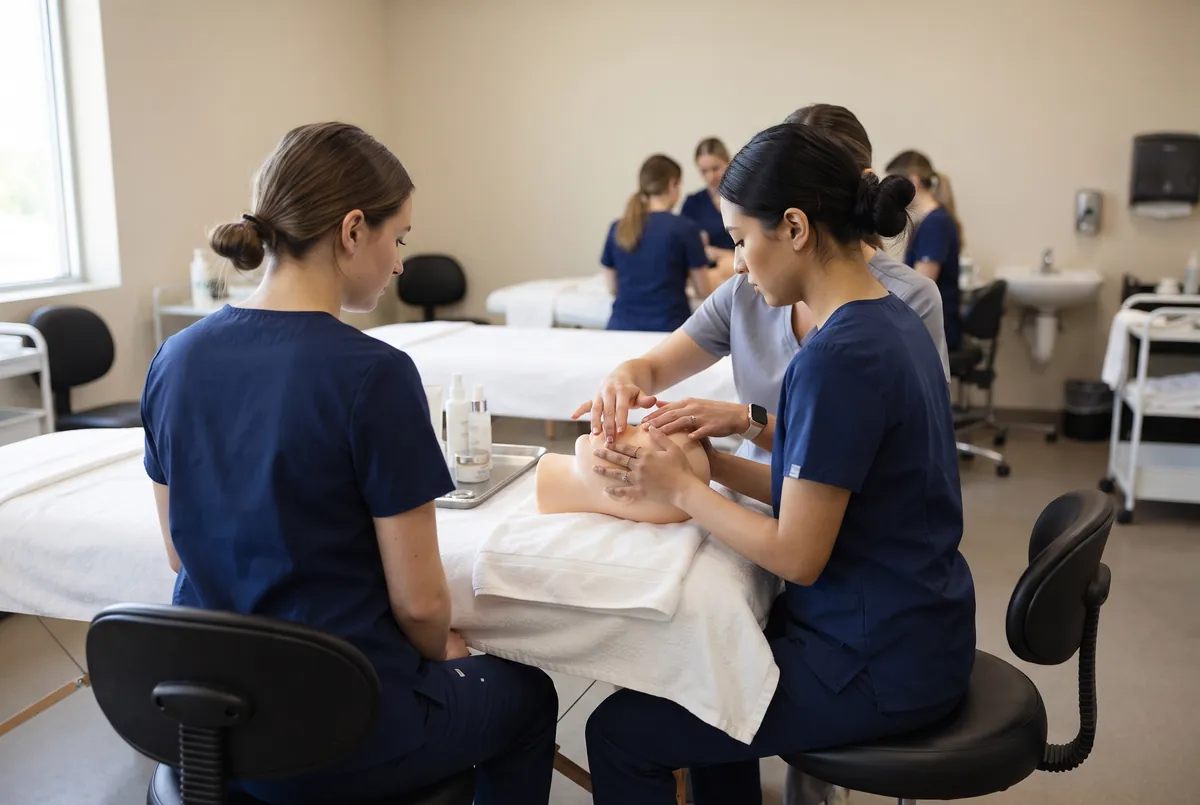
Once licensed, treat buccal massage as an advanced skill. Learn it from an instructor who teaches hands-on, corrects your pressure on live models, and covers the anatomy of the jaw joint, the salivary ducts, and the nerves of the face. Practice the external sculpting sequence until it is fluid before adding the intraoral segment. Write a thorough intake form, a consent form that explains the inside-the-mouth work in plain language, and a clear list of reasons to decline. Build the service into a longer facial at first, so clients experience it in a familiar setting.
Where to go from here
If you are a client, the next step is a single trial session with a licensed practitioner who answered your questions about scope, training, and gloves without hesitation. Go in with modest expectations, pay attention to how your jaw feels over the following days, and decide from there whether a series makes sense. If you have jaw pain, clicking, or locking, start with a dentist or physician instead. If you are a professional, start with your state board and your insurer, then invest in real hands-on training. Done within the rules and with clean technique, buccal massage is a service clients remember and return for.
State Requirements
State licensing guides
Hours, exams, fees, and the licensing board differ by state. Open your state for the current requirements.
Common Questions
FAQ
Buccal massage is a facial massage technique that works the cheek and jaw muscles from inside and outside the mouth at the same time. The practitioner wears fresh gloves, places a finger or thumb between the cheek and the teeth, and uses the other hand on the outside of the face to knead and stretch muscles such as the masseter. It is manual work with no devices or needles, and it is usually part of a longer facial massage.
It works for what it can reasonably do: relaxing tight cheek and jaw muscles and reducing facial puffiness for a while. Many clients feel their face is lighter and moves more freely afterward. Strong clinical research on the technique is limited, so claims about permanent lifting, collagen rebuilding, or fat loss are not established. Results are temporary and depend on habits such as clenching, sleep, and salt intake.
It should feel like deep pressure, not pain. Tight jaw muscles often have tender spots that ease as the muscle releases, and some people feel mild soreness the next day, similar to the feeling after a workout. Sharp or electric pain is not normal, and you should tell the practitioner right away so they can reduce pressure. If pain, numbness, or swelling lasts after the session, contact a physician or dentist.
The depuffing effect usually fades within days. Muscle relaxation can last longer, especially with repeated sessions and when you reduce the habits that tighten the jaw, such as clenching or chewing gum. There is no proven fixed schedule. Many practitioners start with a short series about a week apart, then move to maintenance roughly once a month, adjusting to how the client's muscles respond.
Postpone it if you have an active cold sore, mouth ulcers, gum infection, any contagious illness, or inflamed acne or sunburn on the cheeks. Wait after dental work, fillers, or botulinum toxin until your dentist or injector approves. People with jaw joint disorders, bleeding disorders, blood-thinning medication, facial nerve conditions, or recent facial surgery should get medical clearance first. Tell the practitioner about braces, aligners, and latex allergy.
It depends on the state. External facial massage is within esthetics scope everywhere, but work inside the mouth is treated differently by different state boards, and some states place it under massage therapy or require a special endorsement. Estheticians should ask their board in writing and check their liability insurance before offering it. You can find board information by state on our esthetician licensing pages.
External jaw massage at home is safe for most people and helps maintain results: slow circles on the masseter in front of the ear, then gliding strokes toward the ears and down the neck. Gentle, shallow intraoral work with very clean hands and short nails is possible, but copying deep professional moves is risky because it is hard to judge pressure on your own face. Skip it during cold sores, ulcers, or after dental work.
No. Lymphatic drainage uses very light, slow strokes on the outside of the face and neck to move fluid. Buccal massage uses medium to deep pressure on the muscles of the cheek and jaw, with one hand inside the mouth. A buccal session does reduce puffiness as a side effect, and many practitioners add drainage strokes at the start and end, but the techniques have different pressure and different goals.
Keep Reading
Related Guides


