Electrolysis
Electrolysis in Orange County: Treatment and Training with Aida Khazieva
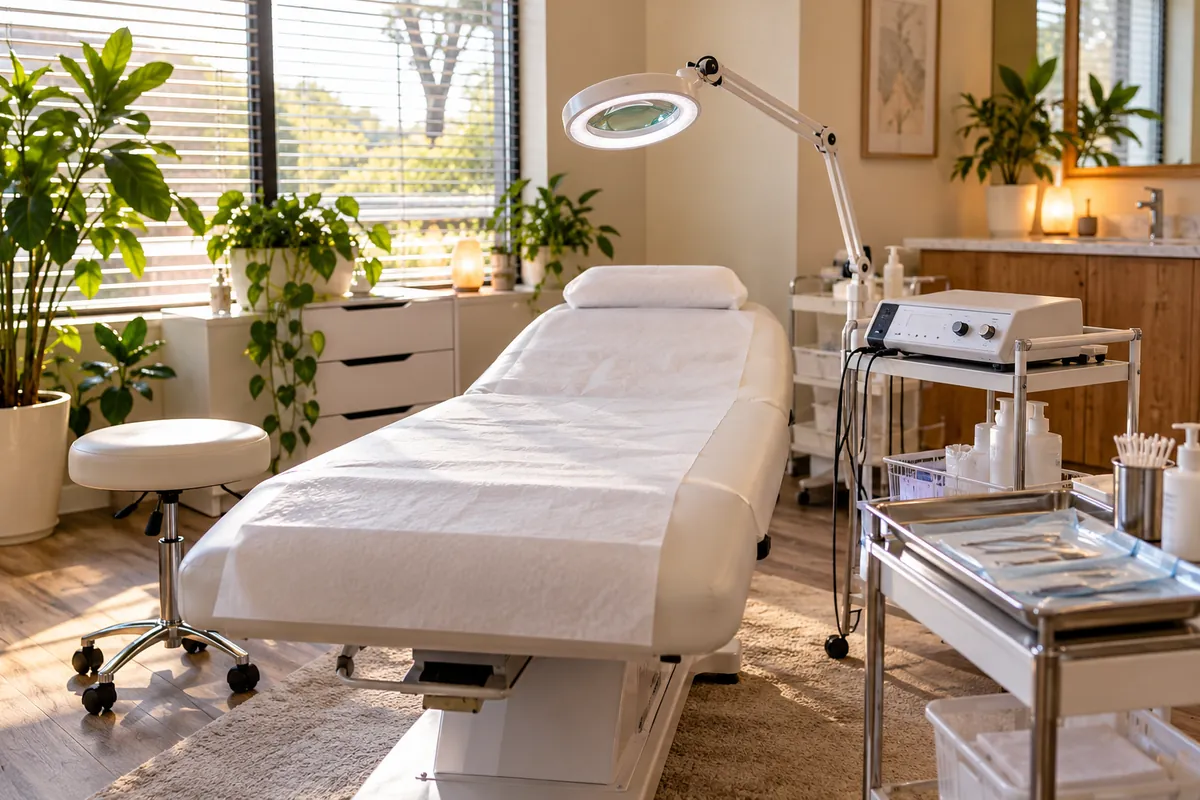
If you live in Orange County and you are looking for permanent hair removal, you will find a long list of laser clinics, medspas and a much shorter list of licensed electrologists. The difference matters. Electrolysis is a hands-on skill: one practitioner, one fine probe, one hair at a time, for dozens of visits. Who holds that probe decides how comfortable the treatment is, how well the skin heals and how many hairs are actually finished at the end of the course. This guide explains what to look for, and it introduces the studio where I treat clients myself.
I am Aida Khazieva, a licensed electrologist and licensed cosmetologist with more than twenty years in the field. I treat clients at Electrolysis & Skin, my electrolysis studio in Orange County, located in Sky Park, Irvine, and I teach electrologists-to-be on this site. Below I describe who the treatment suits, what a first visit looks like, which questions to ask any electrologist before you book, and how my teaching connects to my work with clients. Where I mention the studio's current offer, that is the studio's information today and it can change.
Why the practitioner matters more than the machine
People often start by comparing devices, but in electrolysis the machine is the smaller part of the result. Every modern professional unit delivers current in a controlled way. What varies is the person guiding the probe along the follicle, reading the skin, choosing the intensity for each hair and deciding when a hair should be left alone for a week or two. A steady hand and a trained eye reduce pitting, scabbing and missed follicles, and they shorten the total number of visits because fewer hairs need to be treated twice.
That is why, when you search for electrolysis near you, the credential and the years of hands-on work deserve more attention than the brand of equipment. In California the practice of electrolysis is regulated, and the details of who may treat and what they must hold are set by the state. Our California electrolysis licensing page explains the framework in general terms, and it is worth reading before you trust anyone with a probe near your face. Ask to see the license, and ask how long the person has been treating clients.
Who treats you: Aida Khazieva
Here is what I can tell you about myself, stated plainly. I am a licensed electrologist and a licensed cosmetologist. I have worked in electrolysis for more than twenty years and have treated more than 10,000 clients. I have written two books on electrolysis, including I Am an Electrologist. I hold an EB-1A (extraordinary ability) US visa, and I teach electrolysis to future practitioners through electrolysiscourse.com. I mention these things not as decoration but because they answer the questions a careful client asks before a first appointment: is this person licensed, how experienced are they, and what is their standing in the profession.
Experience changes how a session feels. After thousands of faces and bodies you learn how a coarse hormonal hair behaves compared with a fine one, where the skin is thin and forgiving, and where it needs a lighter hand. You also learn when to stop. A good session is not the one in which the most hairs are treated, it is the one after which the skin heals cleanly so that you can come back on schedule. That judgment is difficult to teach from a book, which is also why I insist that online theory never replaces supervised practice for students.

The studio at Sky Park, Irvine
Electrolysis & Skin is a private studio, which means one practitioner and one client in the room, with no rotating staff and no waiting-room pressure. It is in the Sky Park area of Irvine, and the studio lists free parking on its site. Because Irvine sits in the middle of the county, clients come from Newport Beach, Costa Mesa, Tustin, Laguna and other nearby cities, and the studio is built around that kind of repeat, short-visit schedule. If you are comparing options across Orange County, the homepage of the studio gives the current hours and booking options.
The studio presents its current offer on its homepage: a free consultation for new clients, sessions from $50, and $25 off the first electrolysis session. It lists opening hours as daily from 8am to 9pm and a phone number of (949) 444-6191. Treat these as the studio's own published terms at the time of writing. Prices and hours can change, and your personal estimate depends on the area and the hair, so confirm everything when you contact the studio directly. If you want to see the current price structure before calling, the studio publishes a price page.
Who electrolysis suits best
Electrolysis works on any hair color and any skin tone because it does not depend on pigment. The current passes down the probe into the follicle itself, so the contrast between hair and skin that laser needs is irrelevant. That is why the clients who come to me most often are the ones other methods did not satisfy: people with gray, white, blonde or red hair, people with darker or tanned skin, and people whose hair keeps returning because of hormones. The studio states that it treats all skin types and hair colors, and that matches my daily practice.
Two groups deserve special mention. The first is clients with PCOS or other hormonal causes of facial and body hair. Their growth does not stop after one treatment series, because new follicles keep activating, and electrolysis handles that by finishing the hairs that are present now. I describe the medical background and realistic expectations in our PCOS electrolysis guide, and the studio explains its approach on its page about PCOS and facial hair removal. The second group is clients with light hair, covered below.

Gray, white and blonde hair
Laser looks for pigment. When a hair has lost its pigment or never had much, the device has little to aim at, which is why gray, white and light blonde hairs are a frequent source of frustration after laser sessions. Electrolysis does not depend on color, so it can finish those hairs. Many clients arrive with a face that was treated by laser years ago and now shows a scatter of fine light hairs that the laser skipped. Those are exactly the ones I work on with a probe.
If this is your situation, you can read a detailed explanation in our guide to electrolysis for gray hair, and the studio has a page devoted to gray, white and blonde hair removal with its own examples. I would add one honest note: fine, light hair is not faster to treat just because it is fine. Each hair still needs its own insertion, so the course is measured in visits, not in single appointments.
What a first visit looks like
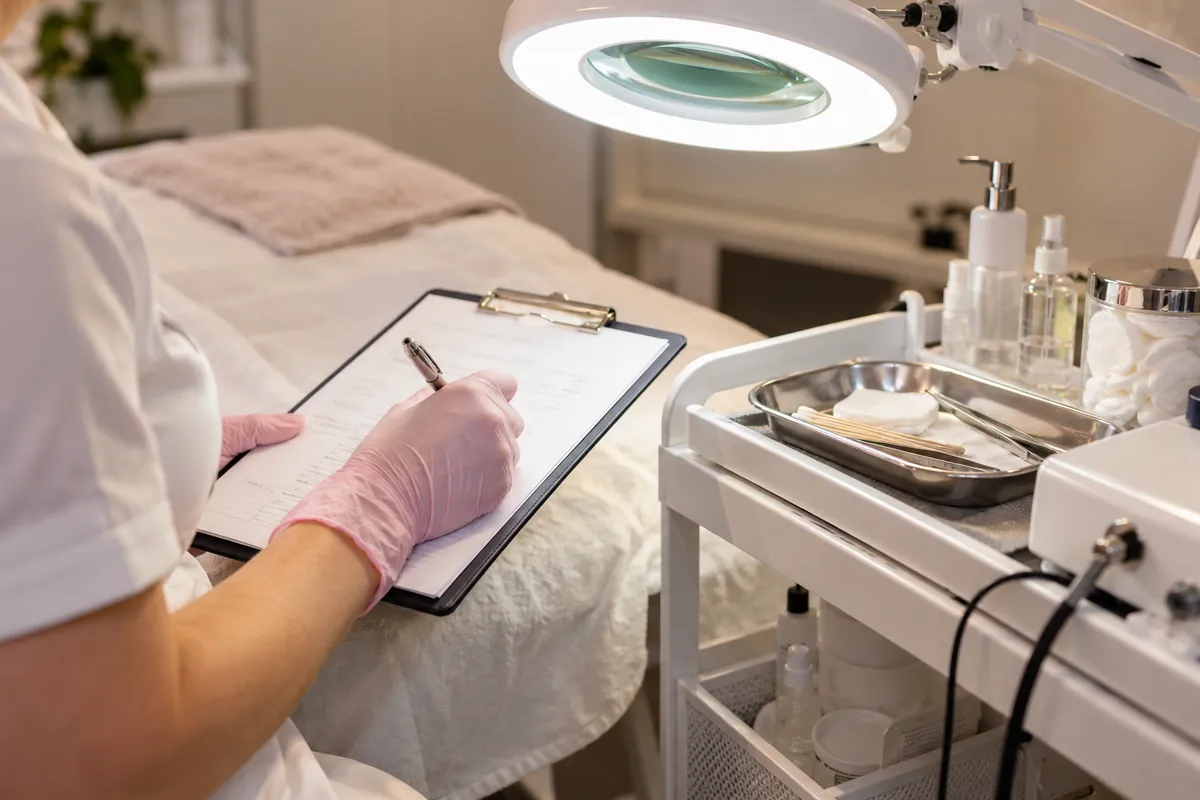
A first visit should not feel like a sales meeting. At the studio, the new-client consultation is free and short: I look at the skin and hair in the area you want to treat, ask about medication, hormonal history, previous laser or waxing, and any tendency to scar or darken, and then I give you a personal estimate. The estimate is personal because the number of hairs, their depth and their growth stage differ from one person to the next, and no honest practitioner can quote a number from a photo alone.
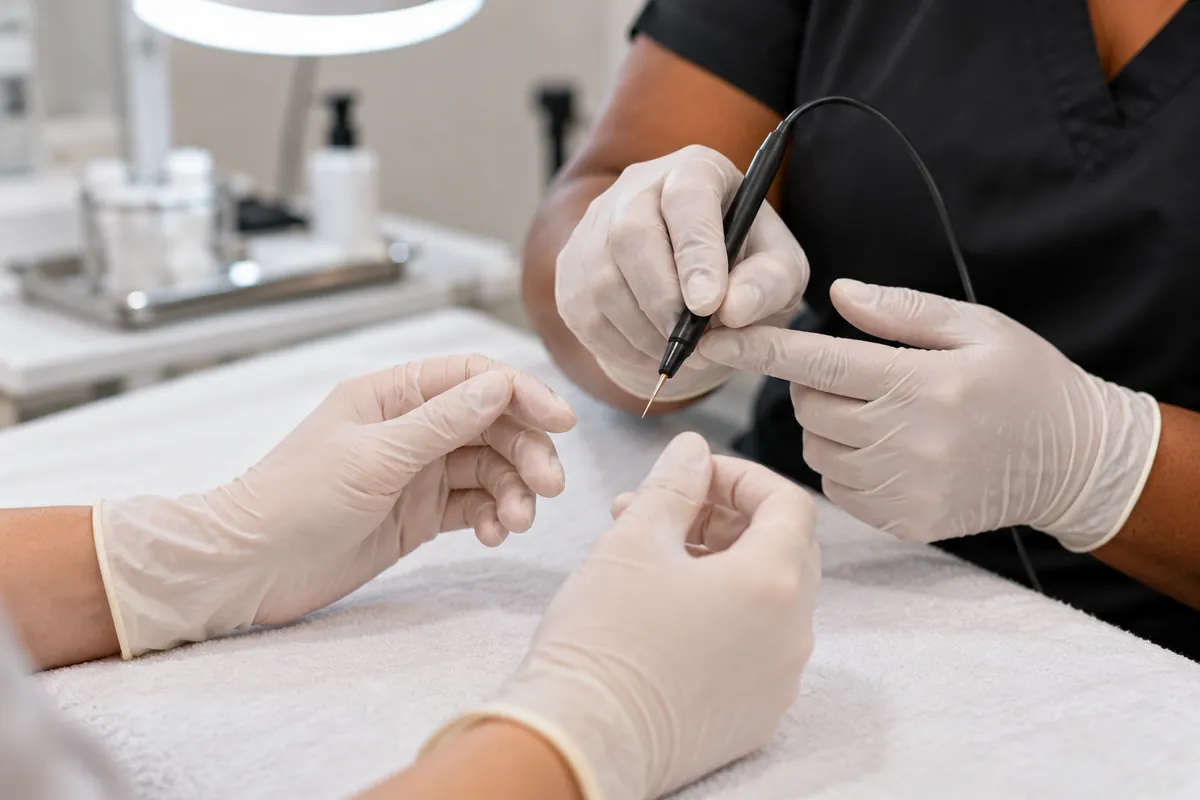
If you decide to treat the same day, the session begins with cleansing, a review of consent, and a test of intensity on a small area so that you can tell me how it feels. A single-use probe is opened in front of you. Treated hairs are lifted out gently, and the skin is soothed afterwards. You leave with written aftercare steps. I explain the healing process in more detail in our electrolysis aftercare guide, which is worth reading before your first appointment so that you know what normal redness looks like.
Electrolysis versus laser in Orange County
Orange County has many laser providers, so most clients ask me the same question: why not laser? The honest answer is that laser is a fair option for dark hair on light skin and for large areas, and that it is described as long-term reduction rather than permanent removal. Electrolysis treats each follicle individually, which takes more visits but works on all hair colors and skin tones. The studio's homepage includes a side-by-side comparison, and it links to a dedicated page on electrolysis versus laser if you want the studio's own view.
Our independent comparison, electrolysis or laser hair removal, goes through the trade-offs without a sales angle. The practical rule I give clients is this: if the hair is dark and the skin is light, laser can thin it quickly and electrolysis can finish what remains. If the hair is light, gray, hormonal, or growing on darker skin, start with electrolysis, because laser will cost money and time without reaching the follicle you care about.
Safety, contraindications and healing
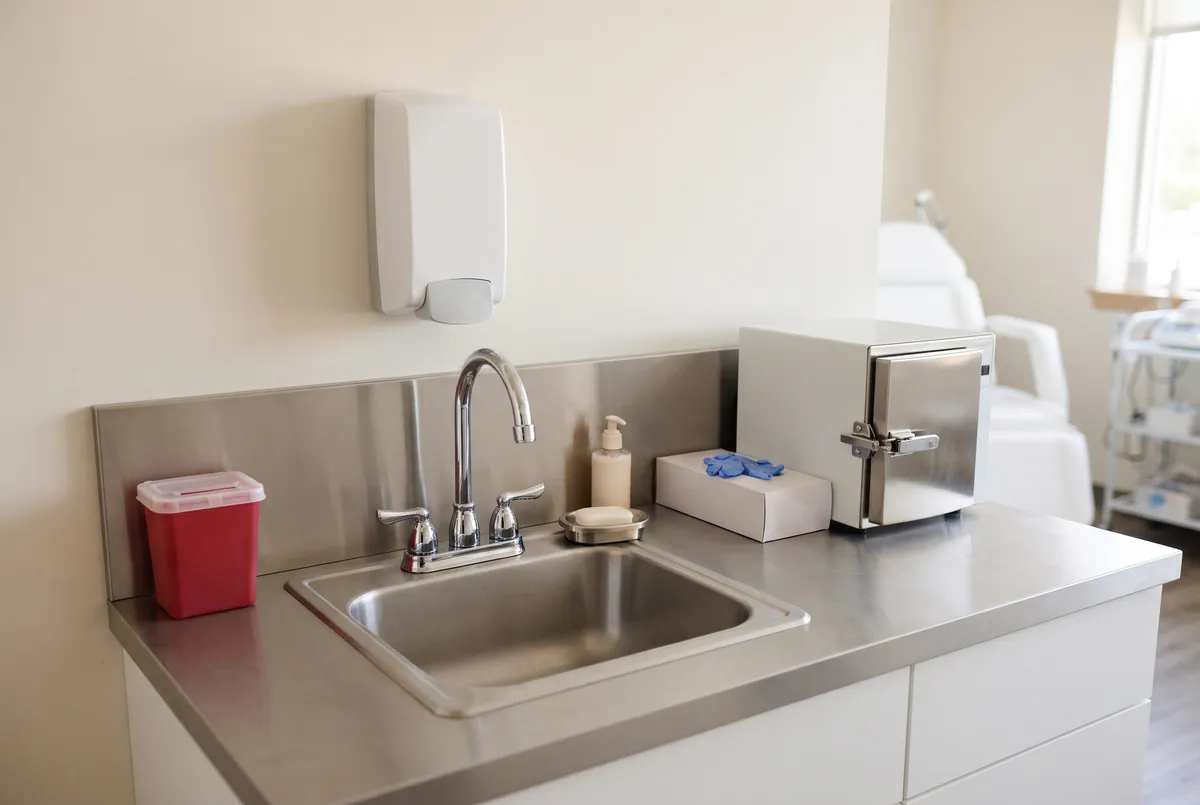
Every client should be screened. Certain conditions change whether a treatment is advisable, how the skin will heal, or whether a physician should approve the plan first. I go through this at the consultation, and I record it. Our guide to electrolysis contraindications lists the common ones from the practitioner's side, which is useful for clients too, because it shows what a responsible screening should cover. This is general information and not medical advice. If you have a medical condition, speak with your physician or dermatologist.
I also record short educational videos on my YouTube channel. They are in Russian, because most of that channel serves Russian-speaking students, but the images of the equipment and technique are easy to follow even without the audio. The first one below covers the main and relative contraindications to electrolysis.
Healing is the other half of safety. Most clients see some redness and small crusts in the treated area for a short time, and those should be left alone. The worst thing you can do after a session is to pick, scrub or apply heavy makeup too early. Another video from the channel, also in Russian, answers a question I hear often: the skin looked fine after the visit, so why is it not healing now? It walks through common causes, from picking to products that irritate.
Questions to ask any electrologist before you book
Whether you choose my studio or another one, use the same checklist. It protects you, and a professional will answer each point without hesitation. If a practitioner avoids the questions, treat that as information.
- Are you licensed for electrolysis in California, and may I see the license?
- How many years have you treated clients, and how many of them have had my kind of hair or skin?
- Are probes single-use and opened in front of me?
- Do you offer a consultation, and is it free?
- Will I get a written estimate and aftercare instructions?
- What happens if my skin reacts badly between visits?
- How are prices shown: per session, per time block, or per area?
Notice that none of the questions concerns the brand of the machine. The cost and the schedule are the other points to settle early. Electrolysis is a course of visits, not a single appointment, and a trustworthy practitioner explains that in the first conversation. To understand the typical shape of a course, our guides on how many sessions electrolysis takes and on how much electrolysis costs give general ranges and the reasons they vary.
Teaching the next electrologists
The second half of my work is education. California and the rest of the country need well trained electrologists, and clients benefit when practitioners know why they do what they do. I teach theory through electrolysiscourse.com, covering hair growth cycles, skin anatomy, modalities, sanitation and client care. I say this clearly to every student: online theory prepares you for the state-required practical training, and it never replaces it. Your state's board sets the hours and the exam, and our electrolysis licensing hub shows you where to start looking.
Working with clients every day is what makes the teaching practical. When I explain needle choice or why a hair should be left for the next visit, I am describing something I did that morning. The next video, also in Russian, is a lesson on needles, filaments and probes, the tools that matter most when you start. If you are considering a career, read our electrolysis courses overview alongside the guide on how to choose an electrolysis school.
How to take the next step
If you want to treat unwanted hair in Orange County, the practical path is short. Decide which area bothers you most, check the credential of the person you choose, and book a consultation so that you leave with a real estimate. The studio's free consultation exists for that purpose, and you can reach it through the Electrolysis & Skin studio website or by calling (949) 444-6191. Hours and offers are the studio's current published terms, so check them when you call.
If you want to become an electrologist, start with theory, read your state's rules, and plan for supervised hands-on hours. Either way, you are welcome to ask me a question through the contact form on this site. I read the messages myself, and I answer with what I would tell a client sitting in my chair.
State Requirements
State licensing guides
Hours, exams, fees, and the licensing board differ by state. Open your state for the current requirements.
Looking for a practitioner or a program near you? Browse electrologists by state and city or beauty schools by state.
Common Questions
FAQ
Aida treats clients at Electrolysis & Skin, a private studio in the Sky Park area of Irvine, California. The studio lists daily opening hours and a phone number of (949) 444-6191 on its website, and you can read about the services at electrolysisskin.com. Hours and offers can change, so confirm them directly with the studio before you visit. Clients come from across the county.
The studio's website currently describes a free consultation for new clients, which includes a look at your skin and hair and a personal estimate. It also lists $25 off the first session and sessions from $50. These are the studio's current published terms and they may change, so check the price page or call before booking.
Yes. Electrolysis does not depend on hair color because the current goes into the follicle itself, not into pigment. That is why it is often chosen after laser has stopped responding to light, gray or white hairs. Each hair is still treated one at a time, so a course takes several visits. See our guide on electrolysis for gray hair for more detail.
It can remove the hairs that are present, whatever their cause. PCOS keeps activating new follicles, so treatment may need to continue while the hormonal pattern is active, and your physician should manage the condition itself. Read the PCOS and electrolysis guide and discuss your plan with your doctor. This is general information, not medical advice.
The videos linked in this guide are in Russian, because her channel mainly serves Russian-speaking students and practitioners. The equipment and technique are visible on screen. The written guides on this site cover the same topics in English, and you can start with our electrolysis needles guide.
Aida teaches electrolysis theory through electrolysiscourse.com. Online theory prepares you for training but does not replace the in-person hours and exam your state requires. Review the electrolysis courses overview and the licensing hub to see what applies where you live.
Keep Reading
Related Guides


