Electrolysis
Shaving Between Electrolysis Sessions: What Is Allowed and Why
Quick answer
Yes, you can shave or trim between electrolysis sessions. Both cut the hair at the surface and leave the root in the follicle, so the hair is still there for the probe. Do not tweeze, wax, thread, sugar or use an epilator, because an empty follicle cannot be treated. Pause shaving before each visit as your electrologist instructs.
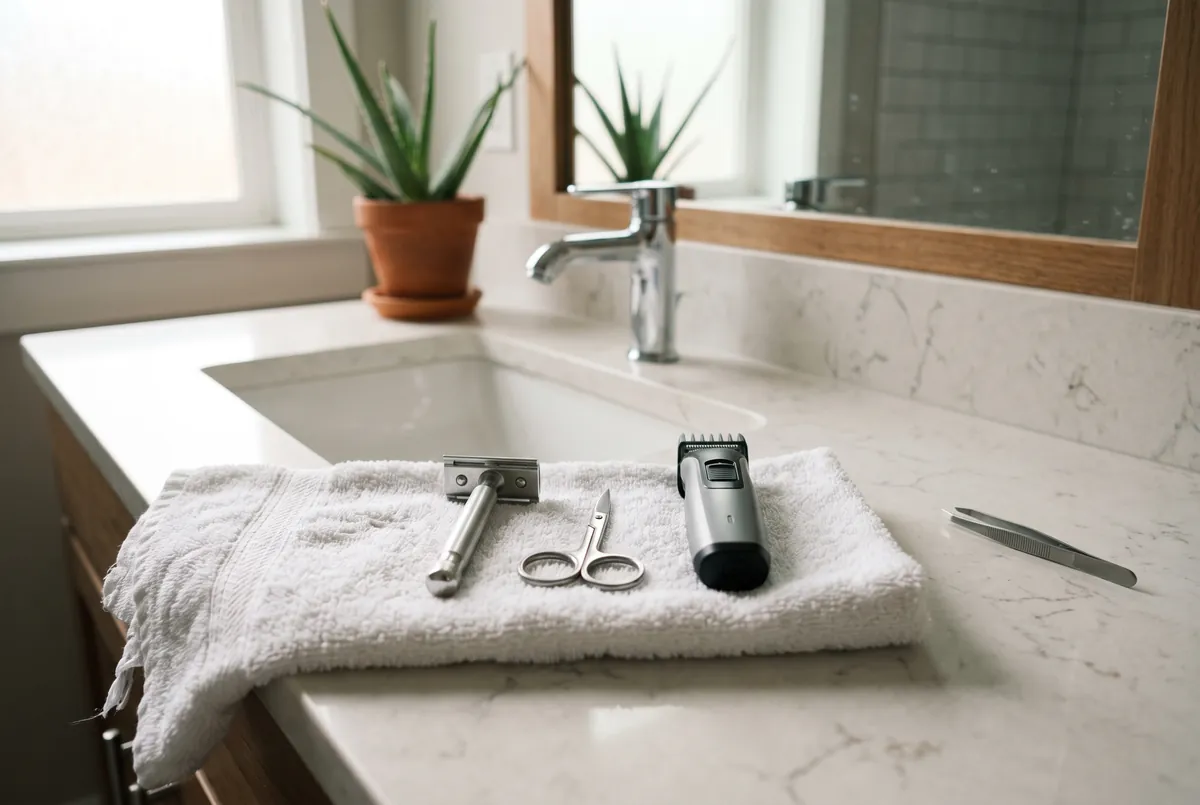
Shaving between electrolysis sessions is allowed, and for most clients it is the method I recommend. The same goes for trimming with small scissors or an electric trimmer. What is not allowed is anything that pulls the hair out by the root: tweezing, waxing, threading, sugaring, and home epilators. The reason is mechanical. Electrolysis treats one follicle at a time, and the electrologist needs a hair standing in that follicle to find the opening, follow the angle, and confirm that the treatment worked. A shaved hair is still in the follicle. A plucked hair is gone, and the follicle sits empty and invisible until it decides to grow again. After more than twenty years as a licensed electrologist, this is the single home habit I ask every new client to change on day one.
This guide answers the practical questions clients ask me in the treatment room. Can you shave between electrolysis sessions, and how close to the appointment? How long does the hair need to be? When is it safe to shave again after a session? Will shaving make facial hair thicker? What about bleaching, depilatory creams, or a laser appointment in the middle of a course? I go through each method, explain what it does to the follicle, add notes for the face, underarms, bikini line, legs and body, and cover the special case of beard clearing in gender-affirming care. This is general education, not medical advice. Your own electrologist's instructions come first, because they know your skin, your hair, and the technique they use.
The Short Answer: Cut the Hair, Never Pull It
Every hair removal method you can use at home falls into one of three groups. The first group cuts the hair at or above the skin surface: razors, electric shavers, trimmers, scissors. The second group dissolves or disguises the hair at the surface: depilatory creams and bleach. The third group pulls the whole hair out of the follicle: tweezers, wax, sugar paste, thread, and rotating epilators. During an electrolysis course, the first group is your friend, the second group is possible with care and with your electrologist's agreement, and the third group works against the treatment you are paying for. If you remember only one sentence from this article, make it this one: between sessions, cut the hair, never pull it.
Why the Follicle Must Contain a Hair
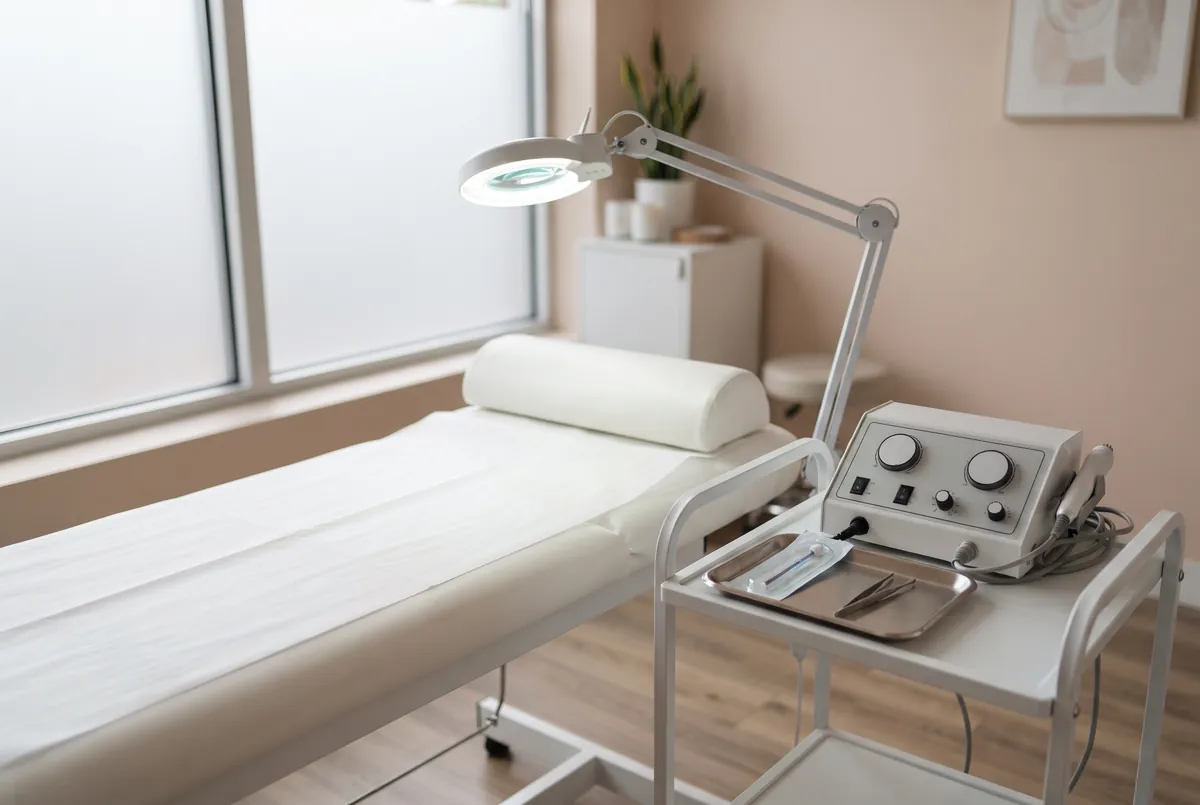
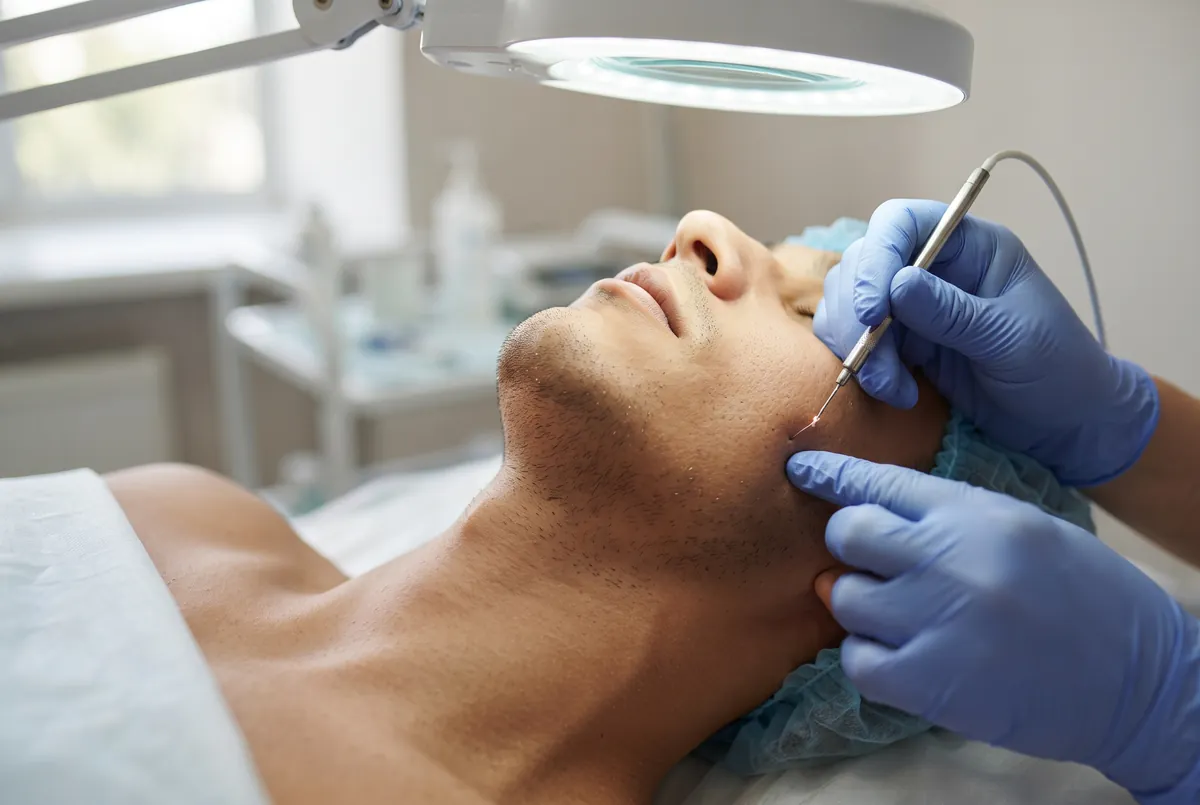
During electrolysis, a very fine probe slides into the natural opening of the follicle, alongside the hair, without piercing the skin. The hair is the guide. It shows where the opening is, which direction the follicle runs under the surface, and roughly how deep it goes. Hairs rarely grow straight up. They lie at an angle, they curve, and on some areas neighboring hairs point in different directions. The electrologist reads all of this from the visible hair shaft and matches the probe to it. An empty follicle gives none of that information. On most skin the opening of an empty follicle cannot even be found reliably, and guessing at the angle is not how safe electrolysis is done.
The hair also serves as the test of the treatment. After the current is applied, the electrologist lifts the hair with tweezers. A hair that has been properly released slides out with no resistance, the way a loose thread slips out of fabric. If the hair resists, the follicle needs more attention. Without a hair, there is nothing to test. This is why the tweezers in an electrologist's hand are doing something completely different from the tweezers in your bathroom. In the treatment room the hair is released first and then lifted. At home the hair is torn from a follicle that is still fully alive, which is the reason it comes back.
Growth phases add a timing problem. Each follicle cycles through an active growing phase, a short transition phase, and a resting phase, after which the old hair sheds and a new one starts. Hairs in an area are not synchronized, so on any given day only part of the follicles hold a growing hair. Treatment works best on actively growing hairs, when the hair is still attached to the structures at the base of the follicle that the current needs to reach. I explain the cycle in detail in the guide to hair growth phases and electrolysis. For this topic, the practical point is short: you want as many growing hairs as possible present and visible at each appointment.
Shaving does not disturb that cycle. The razor cuts dead hair shaft at the surface, and everything under the skin carries on as before. A hair that was growing keeps growing. A hair that was about to shed still sheds on schedule. So the population of hairs you bring to the appointment after shaving is the natural one, with nothing missing. This is also why a recently shaved area is, in a way, convenient for the electrologist. After a clean shave, the hairs that reappear first are the ones in active growth. The short stubble you see a little while after shaving is a map of the follicles that are most worth treating right now.
Why Tweezing, Waxing, Threading and Epilators Set You Back
All four of these methods do the same thing by different means: they grip the hair and pull it out of the follicle. Tweezers take one hair at a time. Thread catches a row of hairs in a twisted loop. Wax and sugar paste grip every hair in a patch. An epilator is a set of rotating tweezers. The result in each case is an empty follicle that is still capable of growing a new hair. That new hair has to form from the beginning and work its way up to the surface, which takes a while, and the timing differs from follicle to follicle and from area to area. Until it surfaces, that follicle does not exist as far as your electrologist is concerned.
Picture what this does to a course. You pluck a group of chin hairs shortly before a visit. At the appointment the area looks nearly clear, so there is little to treat there. Some time later, the plucked hairs come back, usually just after a session and well before the next one. You pluck again because they bother you. The cycle repeats, and those follicles are never present when the probe is. I have seen clients spend a long time in treatment with the same stubborn patch, and the cause was a magnifying mirror and a pair of tweezers at home. Once the plucking stopped and they switched to trimming, the patch finally started to thin.
Pulling causes other problems too. Hair that is repeatedly torn out can come back distorted, and the follicle itself can become curved or irregular, which makes probe insertion harder later. Repeated plucking and waxing are also common causes of ingrown hairs, small bumps, and dark marks, especially on the chin, neck, and bikini line. Those marks sit on the same skin your electrologist needs to work on. Calm, unbroken skin tolerates treatment better and heals faster than skin that is already inflamed from picking. For a full comparison of what each pulling method does to the hair over the years, see the guide on electrolysis vs tweezing and threading.

Method by Method: What Is Allowed Between Sessions
The table below sums up how I sort home hair removal methods for clients in an active electrolysis course. "Allowed" means the method does not interfere with treatment when used sensibly. "With care" means it can work, but it adds a skin risk or needs your electrologist's agreement first. "Not allowed" means the method removes the hair from the follicle and takes it out of reach. The last column matters as much as the verdict, because rules are easier to follow when you know the reason. Individual practitioners may adjust these for a particular client, skin type, or area, and their advice for you overrides a general table.
| Method | Between sessions | Why |
|---|---|---|
| Razor shaving | Allowed | Cuts the hair at the surface. The follicle keeps its hair and its growth cycle, so the hair is there for the probe once it grows out a little. |
| Electric shaver or trimmer | Allowed | Same as a razor, with less friction on the skin. A good choice for sensitive or recently treated areas. |
| Scissors | Allowed | Shortens a visible hair without touching the skin at all. The gentlest option for single hairs on the face. |
| Bleaching | With care | Leaves the hair in the follicle, but the chemicals can irritate skin and very pale hairs are harder to see under the lamp. Ask first, and keep it away from freshly treated skin. |
| Depilatory cream | With care | Dissolves the hair at or just below the surface and leaves the root in place. It can cause irritation or a chemical burn, so it does not belong on healing skin. |
| Tweezing | Not allowed | Removes the whole hair. The follicle is empty and cannot be treated until a new hair grows up to the surface. |
| Waxing and sugaring | Not allowed | Empties every follicle in the patch at once and can lift or inflame skin that needs to stay calm for treatment. |
| Threading | Not allowed | Pulls hairs out by the root in rows, including fine hairs you did not intend to remove. |
| Home epilator | Not allowed | Mechanical plucking over a wide area. Often breaks hairs under the skin and encourages ingrown hairs. |
| Laser or IPL on the same area | Only by plan | Changes the regrowth pattern and stresses the skin. It needs to be coordinated with your electrologist, never added on your own. |
How Long Hair Should Be for Your Appointment
The hair has to be long enough for two things: the electrologist must be able to see it clearly under magnification, and the tweezers must be able to grip it to lift it out after treatment. That is a short length. You do not need to arrive with weeks of growth. A small amount of visible, graspable hair above the skin is enough, and many practitioners prefer it short, because long hairs lie flat, cross over each other, and hide the follicle openings. If your hair is long on arrival, it is common for the electrologist to trim the area first. So "grow it out as much as possible" is not the goal. "Long enough to see and hold" is.
When to stop shaving before the appointment is the question behind most searches on this topic, and it does not have one honest universal answer. You will find practitioners online recommending anything from a short pause to a much longer one. The differences are real, and they come from real variables: how fast your hair grows, how coarse and dark it is, which area is being treated, how good the practitioner's magnification and lighting are, and what strategy they are using. Some electrologists like to work on a recently shaved area precisely because the hairs that come up first are the actively growing ones. Others want more length for a first clearing so they can see the full pattern.
My advice is to ask your electrologist one direct question when you book: "How much growth do you want to see, and when should I shave last?" Then follow that instruction exactly. If you have not been told and the appointment is close, the safer mistake is too much hair. A practitioner can trim long hair in a minute, but nobody can treat hair that is not there. Fast-growing, coarse hair such as a beard needs only a short pause to become workable. Fine, slow facial hair on a woman's upper lip or cheeks may need a longer pause, and many of those clients do not shave at all and simply stop every other method.
Shaving Right After a Session
Freshly treated skin is not ready for a blade. After electrolysis each treated follicle is a tiny healing site. The area is usually pink and slightly swollen for a short time, and it can feel warm or tender. On some areas and with some techniques, pinpoint scabs form over the following days. These are part of normal healing and should be left to fall off by themselves. Dragging a razor across skin in this state adds friction to tissue that is already irritated, can spread surface bacteria into open follicles, and can lift scabs early. A scab removed before it is ready is one of the common ways a temporary mark turns into one that lingers.
So the rule after a session is to wait until the skin has settled before you shave the treated area. How long that takes varies by person, by area, and by how much work was done. A short session on the upper lip of someone with resilient skin may calm quickly. A long clearing session on a dense beard or a sensitive bikini line takes longer. Your electrologist will tell you what they want, and it is one of the questions worth asking before you leave the room. As a general guide, shave again only when the redness and swelling have gone, the skin no longer feels tender to the touch, and you are not shaving over scabs.
When you do return to shaving, do it gently. Use a clean, sharp blade or a freshly cleaned electric shaver, because a dull blade drags and a dirty one carries bacteria. Soften the hair with warm water first, use a mild, fragrance-free shaving product, shave with light pressure in the direction of growth, and do not go over the same strip again and again. Rinse with cool water and pat dry. Skip alcohol-based aftershaves, scrubs, and strong active skincare on the area until it is fully calm. If you can avoid the treated patch for a day or two longer and shave around it, your skin will thank you for it.
If hair bothers you during the healing window, scissors are the answer. Trimming a visible hair close to the skin with small rounded scissors involves no contact with the skin itself, so it is compatible even with a freshly treated area as long as your hands and the scissors are clean. An electric trimmer with a guard is the next gentlest choice. Both are much kinder than a razor on skin that is still pink. For the full picture of what to do and avoid in the hours and days after treatment, including cleansing, makeup, sun, and exercise, see the electrolysis aftercare guide.

Facial Hair for Women and the Myth That Shaving Makes Hair Thicker
The strongest resistance to shaving comes from women with facial hair. I hear the same sentence in many first consultations: "I can't shave my face, it will grow back thicker and darker." Many of these clients have plucked their chin or upper lip daily for years precisely to avoid a razor. The fear is understandable, and it is not supported by how hair works. Shaving cuts the hair shaft at the surface. It does not touch the follicle, the root, or the blood supply that feeds growth. It cannot change the number of follicles, the thickness of the hair they produce, the color of that hair, or the speed at which it grows.
The myth survives because of what regrowth looks and feels like. A hair that has never been cut has a fine, tapered tip. A razor slices it straight across, leaving a blunt end. When that blunt end emerges, it feels stubbly to the fingertips and can look a little more noticeable against the skin than a tapered tip would. The hair itself has the same diameter it always had. Add to this the fact that short dark stubble sits right at the surface where it is easy to see, and it is natural to conclude that shaving caused more hair. What changed was the shape of the tip, and the root was never involved.
There is a second reason women blame the razor. Facial hair driven by hormones often increases over time whatever you do about it. A client with PCOS, or a client going through perimenopause, may start shaving in the same year that her hair growth is increasing for hormonal reasons, and the two get linked in her mind. If your facial hair is clearly increasing, spreading to new areas, or arriving together with cycle changes, acne, or scalp hair thinning, that is a reason to talk with a physician about the underlying cause. Electrolysis removes the hairs that exist. It does not treat the hormones that recruit new ones.
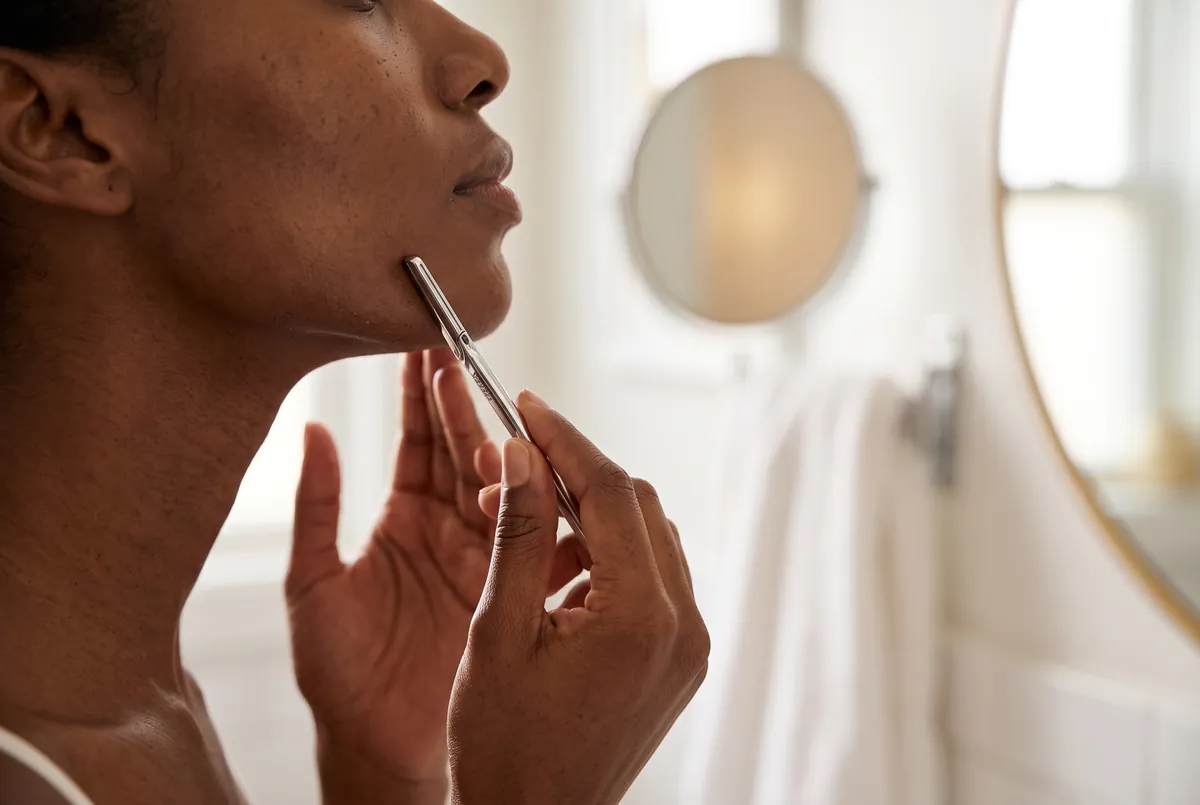
For facial work between sessions, I suggest a tool matched to the hair. A few scattered coarse hairs on the chin are best handled with small scissors, cut flush to the skin. A wider area of growth on the cheeks, jaw, or neck is easier with a small facial trimmer or a single-blade facial razor used with a light hand on clean skin. Makeup can cover the shadow of stubble on the days before an appointment when you are letting hair grow. Many women find that once the first reluctance passes, shaving is quicker and far less irritating than years of plucking were. The area-specific details are in the guide on electrolysis for the face.

Bleaching and Depilatory Creams
Bleach does not remove hair. It lightens the pigment in the shaft so the hair is less visible against the skin. From the follicle's point of view, nothing has happened, and the hair is still there for treatment. That makes bleaching technically compatible with electrolysis, which, unlike laser, does not depend on hair color at all. The current treats the follicle whether the hair is black, red, blonde, gray, or bleached. The practical drawback is visibility. A very pale hair on pale skin is harder to see under the lamp, and a practitioner who cannot see a hair cannot treat it efficiently. Tell your electrologist if you bleach, so they know to look for lightened hairs.
Depilatory creams work differently. They contain chemicals that break down the protein structure of the hair so it can be wiped away. The hair is dissolved at the surface or slightly below it, and the root stays in the follicle and continues to grow. In that sense a depilatory behaves like a chemical shave, and it does not empty the follicle the way waxing does. The catch is that skin is built from similar protein, so a product strong enough to dissolve hair can also irritate or burn skin, particularly on the face and bikini area or when left on too long. Regrowth after a cream can also be slightly slower to reach a graspable length than after a razor.
My position on depilatory creams is cautious. If a client already uses one without any reaction and wants to continue on an area, we agree on timing: never on recently treated skin, never just before an appointment, and always according to the directions on the product. If a client has never used one, I do not suggest starting during a course, because a first-time reaction on skin under treatment is a setback nobody needs. A razor or trimmer does the same job with less risk. Anyone with sensitive, reactive, or easily darkened skin should be especially careful with both creams and bleach, and a dermatologist is the right person to ask if you have had a chemical reaction before.

Laser Hair Removal Between Electrolysis Sessions
Some clients ask whether they can fit a laser appointment between electrolysis visits to speed things up. The two methods can be part of one plan, and they often are. Laser can reduce large areas of dark hair on suitable skin, and electrolysis then removes what laser leaves behind, including light, gray, red, and fine hairs that laser does not treat well. What does not work is doing both on the same patch of skin without coordination. After laser, treated hairs shed over a period of time and the area can look clear even though follicles are still alive. An electrologist looking at that area cannot tell which follicles are finished and which are only between hairs.
There is also a skin reason to avoid overlap. Both methods deliver energy to the follicle and both leave the skin needing recovery time. Stacking them close together on the same area adds irritation without adding benefit. If you want to combine them, the usual approaches are to treat different areas with different methods, or to finish a laser series on an area and then move to electrolysis for the remaining hairs once regrowth has declared itself. Tell both providers what the other is doing. And keep in mind that shaving is the standard home method for laser clients too, for a related reason: laser also needs the hair root in place. The comparison is laid out in the guide on electrolysis or laser hair removal.
Area by Area Notes
Face. The upper lip, chin, jaw, and neck are where the pull-it-out habit is strongest, so they are where switching to cutting matters most. Use scissors for single hairs and a facial trimmer or light razor for wider growth. Be extra patient after sessions here, because facial skin shows redness to everyone you meet and reacts quickly to friction. Avoid shaving over active breakouts. If you treat the brows, do not tweeze between visits at all, and let your electrologist define the shape, since a plucked brow hair is one that cannot be permanently removed at the next appointment.
Underarms. Underarm hair is coarse, grows in several directions, and sits in a warm, damp fold, so the skin is easily irritated. Shaving between sessions is fine, and most clients simply keep their usual routine with a pause before the appointment as instructed. After a session, give the area time before shaving and hold off on anything that stings when applied. Friction from tight sleeves and a dull razor is the usual cause of trouble here. If you used to wax your underarms, expect the first weeks of shaving to show more hair than you are used to seeing, because for the first time all of it is present at once.
Bikini line. This is the area where clients most miss waxing, and the area most prone to ingrown hairs from any method. Shave in the direction of growth with a sharp blade, or use a trimmer with a guard and accept a very short length in place of a perfectly smooth finish. A trimmer is often the better choice, because it causes fewer ingrown hairs and leaves just enough length for treatment. Do not dig out ingrown hairs with tweezers or a pin. Show them to your electrologist instead. A trapped hair can often be released and treated in the session, which removes that follicle from the problem for good.
Legs. Legs are a large area, and an electrolysis course there runs for a long time, so the home routine has to be sustainable. Shaving is fully compatible. The usual arrangement is to shave as normal and leave the section scheduled for treatment to grow for the pause your electrologist asks for. Many practitioners work on legs in sections, so you may only need to leave part of one leg unshaved. Epilators are the main thing to give up here. Many leg clients have used one for years, and the broken, ingrown, and distorted hairs it leaves behind are a familiar sight under the lamp.
Body. For the chest, abdomen, back, arms, hands, and toes, the same rule holds: trim or shave, never pull. Long body hair is usually clipped short before treatment anyway, so a trimmer is the practical tool. Around the nipples and along the line below the navel, where many women have a small number of coarse hairs, scissors are enough between sessions. Clients treating the back or shoulders often cannot reach the area themselves, and those areas are simply left alone or clipped by a partner. Wherever the area, come to the appointment with clean skin and no heavy lotion or oil on it.

Gender-Affirming Clearing and Beard Shadow
Facial hair removal for transgender women and nonbinary clients involves the densest, coarsest growth an electrologist works on, and often the longest sessions. It also carries the highest emotional cost for growing hair out. A client who shaves closely every morning and covers the shadow with makeup is being asked to arrive with visible beard growth, sometimes in a public waiting room, sometimes after a workday. I take that seriously. The growth is necessary for the work, but there are ways to keep the exposure short, and a good practitioner will plan them with you instead of simply issuing an instruction.
The first is scheduling. Beard hair grows quickly, so the pause before an appointment can be brief compared with fine facial hair, and it can be placed over days when you are at home. Early appointments after a weekend, or the first slot of the day, reduce the time you spend in public with growth. The second is working in sections. During a long course it is common to let only the area scheduled for that visit grow and to shave the rest of the face as usual. Ask your electrologist which zone is next. The third is a face covering or a scarf for travel to the studio, which many clients use without comment from anyone.
Clearing before gender-affirming surgery is a separate matter with its own rules. Surgeons set their own requirements for which areas must be cleared and by when, and those requirements vary, so they have to come from the surgical team in writing and be shared with your electrologist. Hair in those areas is normally shaved or clipped between sessions like any other, never waxed. Because the timeline is tied to a surgery date, missed regrowth from plucking or waxing matters even more than usual. The full picture, from planning to choosing a practitioner, is in the gender-affirming electrolysis guide.
What Electrologists Tell Clients, and What Clients Get Wrong
The instruction a new client receives is usually three sentences long. Stop tweezing, waxing, threading, and epilating the treatment area from today. If hair bothers you between visits, shave or trim it. Arrive with enough growth for me to see and grip, and wait until your skin has calmed before shaving after a session. Everything else in this article is the reasoning behind those three sentences. When I teach students, I ask them to give the reasoning along with the rule, because clients who understand why the follicle must hold a hair keep to the plan far better than clients who were only told "no tweezing."
The most common mistake is the "tidy up" before the appointment. A client feels embarrassed about arriving with visible hair, so she plucks the worst ones the night before, and those are the very hairs that were most ready for treatment. An electrologist has seen every kind of hair growth and is not judging yours. Visible hair on the day is what a well-prepared client looks like. The second mistake is plucking the regrowth that appears a week or two after a session. Some of those hairs are new growth from follicles that were resting last time, and they need to be present at the next visit.
A third misunderstanding concerns hairs that seem to come back after treatment. A treated hair that was properly released does not regrow the following week. What clients see is usually a different hair from a neighboring follicle that was dormant during the session, or a follicle that needs more than one treatment to stop producing, which is normal with coarse or distorted hairs. Either way, the answer is the same: cut it if you must, do not pull it, and bring it to the next appointment. The number of visits a course needs depends heavily on this consistency, as explained in the guide on how many sessions electrolysis takes.

Between-Sessions Checklist
Here is the routine I give clients in a form you can keep on your phone. It covers the whole cycle from one appointment to the next. It is deliberately free of fixed day counts, because the right pause before a visit and the right wait after one depend on your hair, the area, and your electrologist's method. Where the list says "as instructed," write in the specific instruction you were given. If you were not given one, ask at your next visit or send the studio a message before you pick up the razor.
- Right after the session: leave the treated area alone. No razor, no scrubs, no picking. Follow the aftercare you were given.
- While the skin is pink, tender or scabbed: if a hair bothers you, cut it with clean small scissors without touching the skin.
- Once the skin is calm: return to shaving or trimming with a sharp, clean blade or a cleaned electric shaver, light pressure, in the direction of growth.
- All the time: no tweezing, waxing, sugaring, threading or epilator on any area under treatment, including "just one hair."
- Bleach and depilatory creams: only if your electrologist agrees, only on fully healed skin, and never close to an appointment.
- Laser or home light devices: not on the same area unless both providers have planned it together.
- Ingrown hairs: do not dig them out. Point them out at the next visit so they can be treated.
- Before the appointment: stop shaving the area to be treated as instructed, so the hair is long enough to see and grip.
- If unsure about length: arrive with more hair, not less. Long hair can be trimmed in the studio.
- On the day: clean skin, no heavy lotion, oil or makeup on the treatment area.
- At the start of the visit: tell your electrologist about any plucking, waxing, new products, medications or skin reactions since last time.

Your Next Step
If you are in a course now, the next step is small: put the tweezers away today, and at your next visit ask your electrologist exactly how much growth they want to see and when you may shave after treatment. Write the answers down. If you have not started yet and are still comparing practitioners, the way a studio answers the shaving question is a useful test. A careful electrologist will explain the reasoning, adapt it to your area and hair type, and will not make you feel awkward about arriving with visible growth. You can look for practitioners in the electrolysis studio directory.
If you are a student or thinking about entering the profession, this topic is a good example of what client education looks like in practice. Much of an electrologist's success depends on what the client does at home, and explaining follicle biology in plain words is part of the job. Theory like this can be studied online, and you can see what is available on the electrolysis courses page. Online study builds knowledge only. It does not replace the in-person training hours or the license that your state requires before you may treat clients, and those requirements differ from state to state.
State Requirements
State licensing guides
Hours, exams, fees, and the licensing board differ by state. Open your state for the current requirements.
Looking for a practitioner or a program near you? Browse electrologists by state and city or beauty schools by state.
Common Questions
FAQ
Yes. Shaving and trimming are the home methods that fit with electrolysis, because they cut the hair at the surface and leave the root in the follicle. The hair keeps growing on its normal cycle and is there for the probe at your next visit. What you should not do is tweeze, wax, thread, sugar, or use an epilator on the treatment area, because those remove the whole hair and leave an empty follicle that cannot be treated. Pause shaving before the appointment as your electrologist instructs, so the hair is long enough to see and grip.
Long enough for the electrologist to see it under magnification and to grip it with tweezers after the follicle has been treated. That is a short length, and long hair is often trimmed before work starts. The pause you need before a visit depends on how fast your hair grows, the area, and how your practitioner likes to work, so ask them directly and follow that instruction. If you are unsure, arrive with more growth.
Wait until the treated skin has settled. That means the redness and swelling have gone, the skin is no longer tender, and you are not shaving over any pinpoint scabs. How long this takes differs by person, by area, and by the length of the session, so ask your electrologist before you leave. If a hair bothers you sooner, cut it with clean small scissors without touching the skin. When you return to shaving, use a sharp, clean blade or a cleaned electric shaver, light pressure, and a mild product.
No. A razor cuts the hair shaft at the surface and does not reach the follicle, so it cannot change how many hairs you have, how thick they are, what color they are, or how fast they grow. Shaved hair feels coarser because the blade leaves a blunt tip in place of the natural tapered one, and short dark stubble is easy to see at the surface. If your facial hair really is increasing over time, the cause is usually hormonal and worth discussing with a physician. Shaving is a safe way for women to manage facial hair during an electrolysis course.
The follicles you emptied will have no hair in them at your next appointment, so they cannot be treated. The hairs then return on their own schedule, often between visits, and the same follicles keep being missed. This stretches the course out and makes progress hard to judge. Repeated pulling can also distort follicles and cause ingrown hairs and marks. If you have already plucked or waxed, do not hide it. Tell your electrologist, stop from now on, and switch to shaving or trimming. One slip will not ruin a course, but a habit will slow it.
Both leave the root in the follicle, so they do not block treatment the way plucking does. The risk is to the skin. Depilatory creams and bleaching products contain active chemicals that can irritate or burn, and they should never go on recently treated skin or be used close to an appointment. Bleached hairs can also be harder for the electrologist to see. Ask your practitioner before using either one, follow the product directions, and stop if your skin reacts. For most clients a razor or a trimmer does the same job with less risk.
Not on the same area without a plan. Laser changes the regrowth pattern, and after it the skin can look clear while follicles are still alive, which makes it hard for an electrologist to judge what remains. Both methods also need the skin to recover afterward. The two can work well together when different areas are treated with different methods, or when electrolysis follows a finished laser series. Tell both providers what the other is doing.
Keep Reading
Related Guides


