Electrolysis
Electrolysis Over a Tattoo: Is It Safe and When to Start
Quick answer
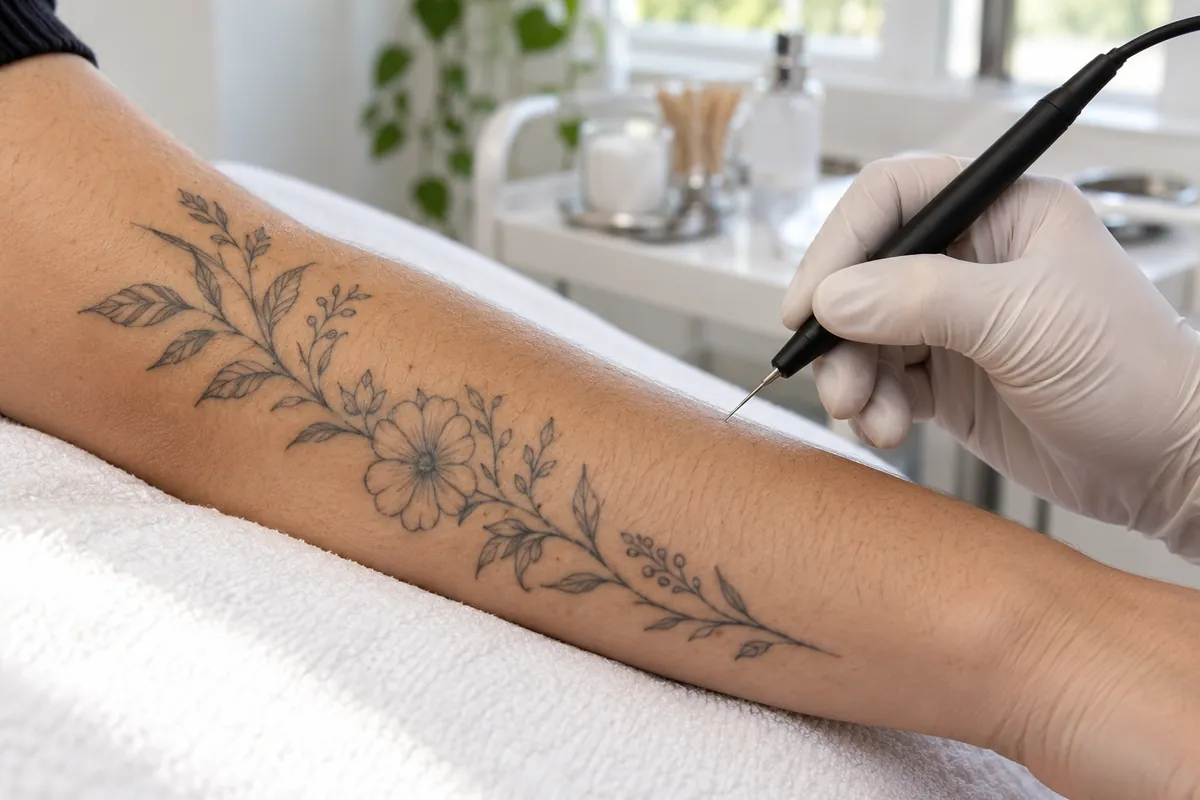
Electrolysis is safe over a tattoo once the skin has fully healed, because it treats each follicle with a probe and does not use light. Laser and IPL target pigment and are kept off tattoos. A fresh tattoo must look and feel like the surrounding skin first: no scabs, shine, pinkness, or tenderness. Sessions over dark ink take longer.
Electrolysis over a tattoo is safe once the tattoo has fully healed, and it is the one permanent hair removal method that can be used directly on inked skin. The reason is simple. Laser and IPL work with light that is absorbed by pigment, and tattoo ink is pigment, so those devices must stay off a tattoo. Electrolysis does not use light at all. A fine probe is placed into one hair follicle at a time and a small amount of current is delivered there, so the color and density of the ink are irrelevant to how the treatment works.
That does not mean every tattoo is ready for treatment on any given day. A fresh tattoo is a healing wound and is left alone until the skin has completely recovered. A healed one is ordinary working skin, with a few practical details an electrologist needs to account for: hairs are harder to see against dark ink, and some people's tattooed skin reacts a touch more strongly. This guide covers timing after a new tattoo, what treatment over healed ink is like, how to plan if you want hair removed before getting tattooed, and what to tell your electrologist.
Why electrolysis works on tattooed skin when laser does not
Laser hair removal depends on contrast. The light is tuned to be absorbed by the dark melanin in a hair, which heats the follicle. Tattoo ink is a dense deposit of pigment sitting in the skin, and it absorbs that same light eagerly and unpredictably. The result can be a burn, blistering, scarring, or a faded and distorted design. That is why laser providers either refuse to treat tattooed skin or cover the tattoo and work around it with a margin. The same caution applies to IPL devices, including the ones sold for home use.
Electrolysis is built on a different principle. The probe physically enters the natural opening of the follicle and delivers energy at its base, where the cells that grow the hair live. Nothing about that process depends on what color the skin or the hair is. This is the same reason electrolysis works on blonde, red, gray, and white hair that laser cannot target. For clients who have a sleeve, a back piece, or a small design right where coarse hair grows, electrolysis is the route to permanent removal over the ink. I compare the two methods more broadly in the guide on electrolysis or laser hair removal.
A different risk profile is not the same as no risk. With electrolysis on tattooed skin, the things to manage are the healing stage of the tattoo, the reduced visibility of hairs against saturated ink, and the possibility of slightly stronger redness afterward. Each hair removal method needs its own logic for judging risk, and conclusions about laser should not be carried over to electrolysis in either direction.
What a tattoo does to the skin, and where the probe goes
Tattoo pigment is deposited in the dermis, the middle layer of the skin. Hair follicles also pass through the dermis, but each one is its own lined channel running along the hair shaft down to the bulb. An electrolysis probe follows that channel. It is not pushed at random through inked tissue, and the energy is concentrated at the lower part of the follicle. In most cases there is no meaningful contact between the probe and the ink particles, which are held in the surrounding dermal tissue.
On healed skin a tattoo usually looks and feels like the skin next to it. In some people the tattooed area is slightly firmer, because the body forms a small amount of scar tissue around the pigment, especially where an artist packed color or went over the same spot repeatedly. For a fine probe this is rarely a problem. The electrologist simply pays closer attention to the angle each hair grows at, and judges the follicle by the hair itself and not by the design under the skin.
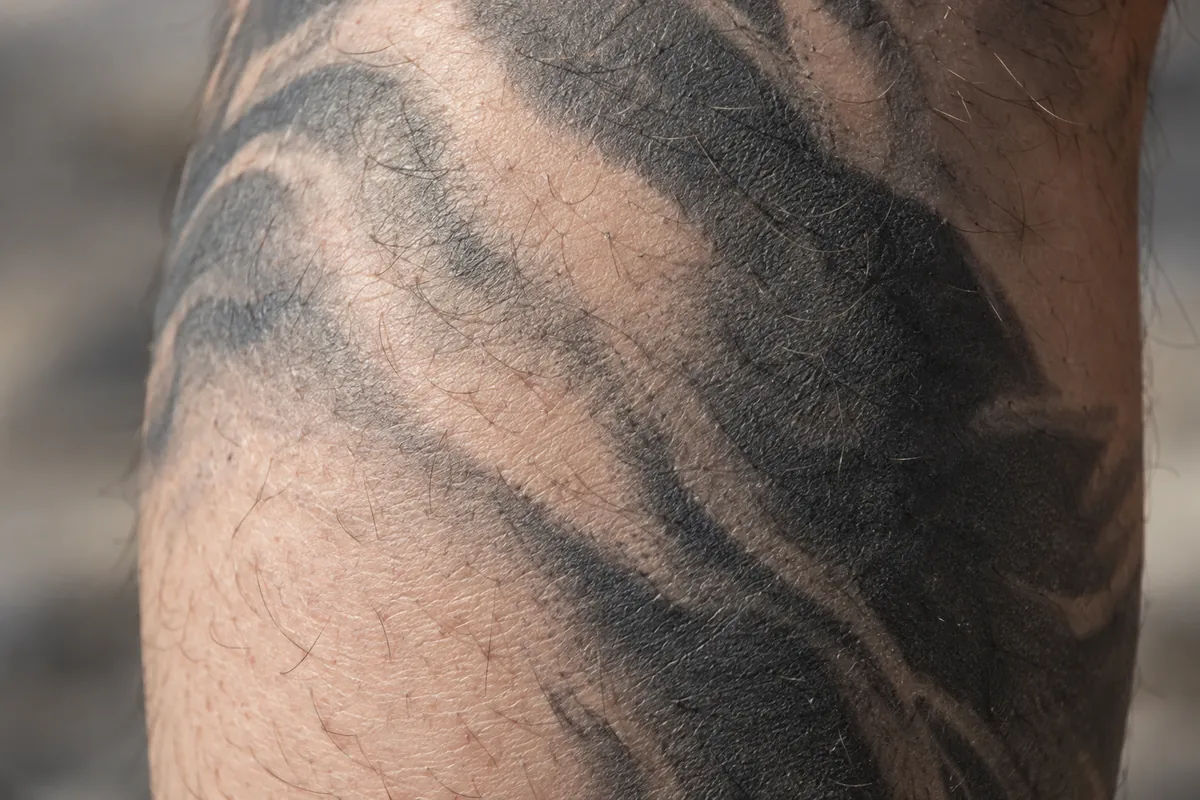
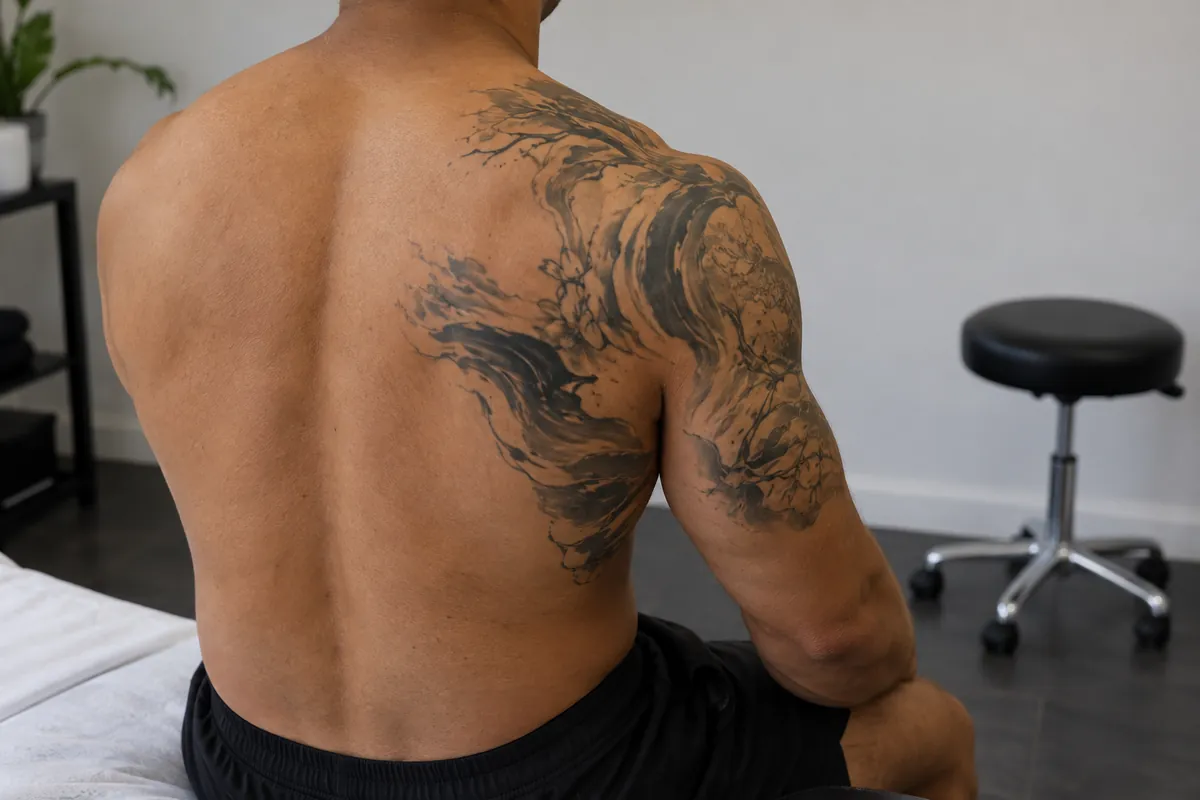
In areas with very dense work, follicles can sit right on heavy lines or inside solid black fill. This is where technique matters most. The electrologist has to see the direction of growth for every single hair before inserting, and that takes longer when a dark hair lies on dark ink. Expect a session over a saturated tattoo to move more slowly than the same area on bare skin. Good magnification and strong, well-angled lighting make most of the difference.
Fresh tattoos: why you have to wait
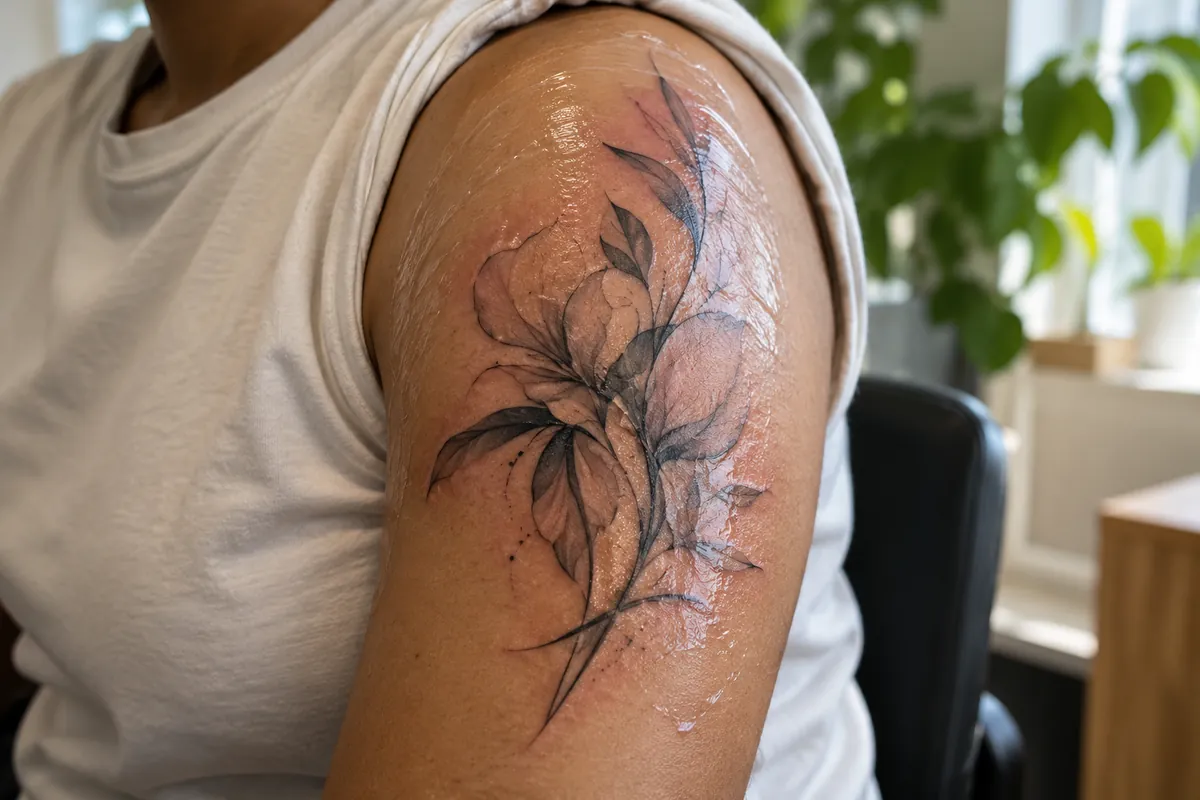
A new tattoo is an open or partly open wound, even when it starts to look calm. Thousands of needle punctures have disrupted the surface, the skin is inflamed, and its barrier function has not recovered. During this period the area weeps, then forms a thin scab or flakes, then looks shiny and slightly pink. Electrolysis on skin in any of those stages adds injury to tissue that is already irritated and creates a route for infection through a surface that is not sealed. It can also disturb how the ink settles.
There is no universal number of days. How fast a tattoo heals depends on its size, how densely it was worked, the placement on the body, your own healing tendencies, and how carefully you followed the artist's aftercare. Tattoo studios commonly describe the surface as healing over a few weeks, with the deeper layers continuing to settle for longer than that. Fine linework generally recovers faster than large areas of solid fill, and color work that needed repeated passes often takes longer than simple black and gray.
The practical rule I give clients is to wait until the skin over the tattoo is indistinguishable from the skin around it, by sight and by touch. That means no scabs or flakes, no shine, no pinkness, no raised lines, and no tenderness when you press lightly. If you are unsure, ask the artist who did the piece. They saw the skin before and after and know how that particular work tends to heal. Waiting a few extra weeks costs you nothing in the long run. Starting early can cost you the crispness of the tattoo.
| Question | Fresh tattoo | Healed tattoo |
|---|---|---|
| Can electrolysis be done? | No, not until the skin has completely healed | Yes, with careful technique |
| Main concern | Added trauma, infection, disturbed healing of the ink | Reduced visibility of hairs against saturated ink |
| What the electrologist needs | To wait for healing confirmed by sight and touch | To know about the tattoo in advance and work more slowly |
| Skin reaction after a session | Not applicable | Normal, sometimes with slightly more redness |
| Hair removal in the meantime | Careful trimming only, once the artist allows it | Shaving or trimming between sessions, no tweezing or waxing |
Skin over a tattoo can look settled surprisingly early. The redness drops, the flaking stops, and the surface appears smooth. But visible healing and full recovery of the skin are two different processes. The outer layer rebuilds quickly. The deeper structures of the dermis, with their capillaries and nerve endings, keep remodeling for some time after the surface looks normal. "It is not red anymore" is therefore not sufficient. The residual puffiness and the leftover sensitivity to touch need to be gone as well.
Electrologists who see tattooed clients regularly go by the state of the skin at inspection, not by the calendar. I look at the area under magnification and press lightly with a fingertip. If the tattooed patch feels firmer or warmer than the tissue around it, or the client flinches at ordinary pressure, that tells me to wait, even if the usual number of weeks has passed. On the first session after a tattoo has healed, I also start conservatively: fewer follicles, more space between them, and a check on how the skin responded before working at a normal pace.
Some situations call for extra caution and sometimes a medical opinion. If you have a history of slow wound healing, raised or keloid scars, a tattoo that became infected or had an allergic reaction to the ink, or you take medication that affects healing or immunity, raise it with your electrologist and, where relevant, with your physician before booking. A tattoo that has developed bumps, persistent itching, or raised areas long after healing should be seen by a dermatologist first.
What a session over a healed tattoo is like
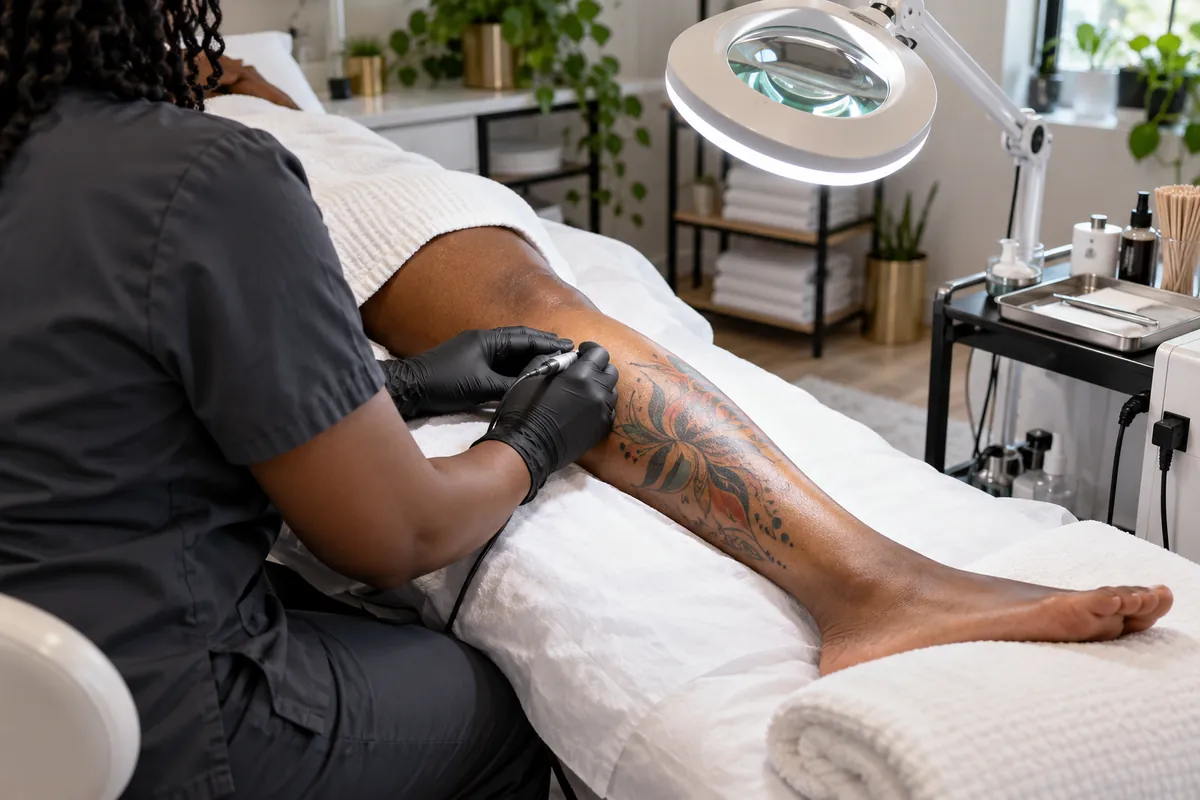
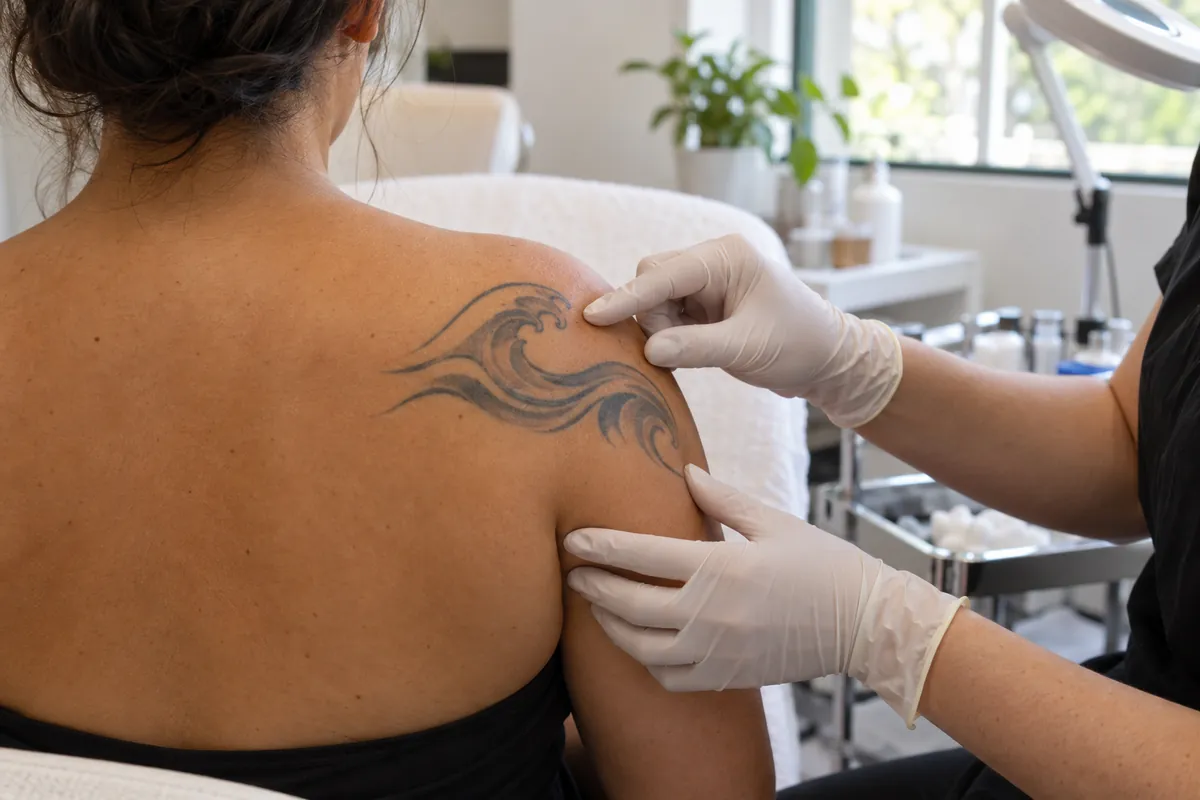
Once the skin has recovered, electrolysis over a tattoo is technically the same as electrolysis anywhere else. The area is cleansed, a sterile single-use probe is placed into the follicle along the hair, current is applied for a moment, and the hair is lifted out without resistance. The difference lies in the electrologist's preparation. Knowing there is ink under the hair, they slow down, pick the insertion angle carefully, and do not rush follicles that are hard to make out against saturated color.
Most clients report that it feels no different from the bare skin next to the tattoo. A minority find tattooed skin a little more sensitive to any mechanical or thermal stimulus, and for them the session may feel slightly sharper in that patch. Afterward, the usual pinpoint redness and mild swelling can be somewhat more noticeable over the tattoo than beside it, and on heavily inked skin it is simply harder to see, which is a reason to judge healing by feel as well as by sight.
Aftercare is the standard routine: clean hands, gentle cleansing, no picking, no heat, pools, or heavy sweating for the first day or two, and sun protection. Sun matters doubly here, since ultraviolet light fades ink and darkens post-treatment marks. Everything is laid out in my electrolysis aftercare guide. I ask clients to watch a tattooed area slightly more closely after the first one or two sessions, and to tell me if the reaction was different from what they see on untattooed skin.
Will electrolysis fade or damage the tattoo?
Properly performed electrolysis on a healed tattoo is not expected to change the design. The treatment is pinpoint work inside individual follicles. It does not strip the surface the way a harsh wax pull can, and it does not interact with pigment the way light does. The follicle openings are tiny, and the energy is aimed at the base of each follicle. Clients who have had full areas cleared over old sleeves and leg pieces typically see the tattoo looking sharper afterward, simply because hair is no longer blurring the lines.
The situations where marks can occur are the same as on any skin: treatment that is too aggressive, an inaccurate insertion, picking at crusts, infection, or sun on healing skin. Any of those can leave a small spot of lighter or darker color or, rarely, a tiny pit. On plain skin such a spot blends in over time. On a tattoo, a dot inside a crisp line or a smooth gradient may be more noticeable to its owner. That is the real reason to choose an experienced electrologist and to follow aftercare closely, not any special reaction between current and ink.
If you are worried, ask for a small test area in a less prominent part of the design. A few minutes of treatment, followed by a week or two of watching how the skin heals, tells both of you far more than general reassurance. I offer this routinely for large or meaningful pieces, and it is also a good way to settle on comfortable settings before committing to long sessions.
Planning hair removal before a new tattoo
Some of the most satisfied clients I see are the ones who plan the other way around: they remove the hair first and get tattooed second. If you know you want a piece on a hairy forearm, chest, calf, or back, clearing the area in advance means the artist works on smooth skin, the finished design is not obscured, and you never face the problem of hair removal over ink. Before the tattoo exists, you also still have a choice of methods, since laser is an option on untattooed skin for people with suitable hair and skin color.
The catch is time. Permanent hair removal is a series of sessions spread over many months, because hairs grow in cycles and only the ones active at each visit can be treated. The cycle is explained in my guide to hair growth phases and electrolysis. If the tattoo date is close, you are unlikely to finish first. That is fine. You can start, pause for the tattoo, and resume over the healed ink with electrolysis. What does not work is squeezing a tattoo between two closely spaced sessions.
Build the sequence deliberately. Stop electrolysis on that patch a few weeks before the tattoo appointment, so the skin is completely calm, with no redness, crusts, or dark dots, when the artist starts. Tattoo artists want intact, healthy skin as much as electrologists do. Then get the tattoo, follow the artist's aftercare, let the skin heal fully, and only then return. Tell both professionals about the other's dates. Clients who plan this way lose far less time than those who sort out the overlap afterward.

Managing hair while a tattoo heals
While a new tattoo is healing, hair in the area grows back and can itch or look untidy. Options are limited on purpose. Most artists advise against shaving over a fresh tattoo, since a blade scrapes a healing surface, and waxing, sugaring, depilatory creams, and epilators are out of the question. The gentlest approach is to leave the hair alone, or once the artist says it is fine, to trim it carefully with small scissors or a guarded trimmer close to the skin without touching any scab or flaking area.
Meanwhile, do not add other stress to the skin. Keep the tattoo out of the sun, avoid tight clothing that rubs it, and skip scrubs, acids, self-tanner, and fragranced body products on that patch unless your artist recommended something specific. Simple, consistent aftercare shortens the recovery, and with it the wait before electrolysis becomes possible there again. An infection or a picked scab does the opposite, pushing back both the final look of the tattoo and your hair removal schedule.
If you are already in the middle of an electrolysis course elsewhere on your body, there is no reason to stop it. The rest of your sessions can continue as planned while one patch heals. Many clients use the waiting period to make progress on another area, then fold the tattooed patch back into the plan once it has recovered. Just avoid lying on, pressing, or taping over a healing tattoo during a session on a neighboring area.
What to tell your electrologist in advance
Your electrologist should know about a tattoo before the session starts, ideally before you book. A short message or call lets them estimate the time required and, if the tattoo is too recent, give you an honest date to come back instead of having you make the trip for nothing. If the studio uses an intake form, note any tattoo in the area you want treated, including old ones. It is part of the overall picture of your skin, and it is better seen whole than discovered mid-session.
- How long ago the tattoo was done, and whether it has had any touch-ups since.
- Whether the skin over it has fully healed, and whether it healed normally or with problems such as infection, heavy scabbing, or a reaction to the ink.
- How dense the work is where the hair grows: fine lines, shading, or solid fill.
- Any earlier irritation or slow healing in that spot after shaving, waxing, or other treatments.
- Whether you tend to form raised scars or dark marks after skin injuries.
- Whether a new tattoo, a touch-up, a cover-up, or laser tattoo removal is planned for the same area.
Pay attention to how the practitioner responds. Before the first session over a tattoo, an experienced electrologist looks at the area closely, feels it, and asks when it was done and how it healed. If the tattoo is recent, they name a realistic time to return and do not try to fit you in anyway to fill the schedule. Be cautious with someone who does not ask about a tattoo sitting in the treatment area at all. Inspection before treatment is a basic part of safe practice, and you can see what else belongs to it in my guide on preparing for your first electrolysis session.
Body areas, old tattoos, and color work
How tattooed skin behaves varies a little by location. On the forearm and lower leg, where skin is denser and hair is often coarse, tattoos tend to heal uneventfully, and electrolysis afterward feels and heals the same as on untattooed skin. On thinner, more sensitive skin such as the ribs, inner arm, or inner thigh, the tattoo itself may take longer to settle, and the redness after a session can be a bit more visible. Tattoos near the underarm or bikini line are less common, but where they exist, hygiene and loose breathable clothing after sessions matter more, since those areas are prone to irritation anyway.
Old tattoos are the easiest case. Over the years the pigment softens and spreads slightly, the outlines lose some sharpness, and the skin has long since adapted. In density and in its reaction to treatment, it is generally no different from the tissue around it, and electrolysis over a tattoo that is many years old proceeds like any other area. The only practical point is visibility on dark fill, which applies to old and new work alike.
Color tattoos deserve a note. Bright pigments are sometimes packed more heavily for saturation, and certain colors, red in particular, are known for causing skin reactions in some people, occasionally long after the tattoo was done. For fresh color work, allow a more generous healing margin and go by the state of the skin, not the calendar. If a colored section is raised, itchy, or bumpy, do not have electrolysis there until a dermatologist has looked at it.
Cosmetic tattoos, permanent makeup, and tattoo removal
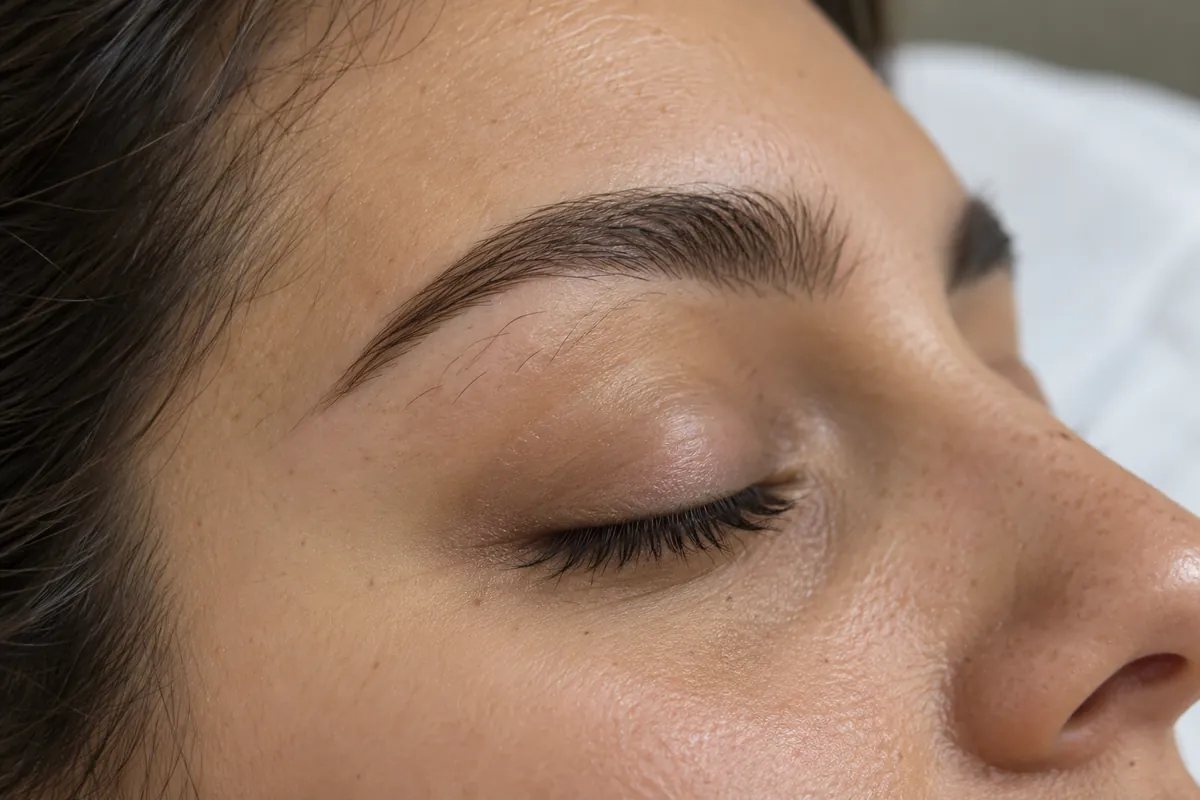
The same principles apply to cosmetic tattooing. Microbladed or powder brows, permanent lip liner, and scalp micropigmentation all place pigment in the skin, and laser hair removal is kept away from them for the same reason as body tattoos: light can burn the area or change the pigment color. Stray hairs around tattooed brows or along a tattooed lip line can be treated with electrolysis once the cosmetic work has completely healed. Tell your electrologist when it was done and when your next touch-up is planned, so sessions can be timed around it. Brow work in general is covered in my guide to eyebrow shaping with electrolysis.
Laser tattoo removal is the reverse situation. Each removal session leaves the skin inflamed, sometimes blistered, and healing over a period of weeks, and a course involves repeated sessions. Skin in the middle of tattoo removal should be treated like a fresh tattoo: no electrolysis until it has fully recovered from the most recent laser session, and with the agreement of the provider doing the removal. If you plan both, decide with your providers which goes first in that area and leave real gaps between them.
Home hair removal devices and tattoos
Two kinds of home devices come up in this conversation. The first is home IPL. These devices work on the same light-and-pigment principle as professional systems, and their own instructions warn against use over tattoos. People burn themselves by assuming a consumer device is too weak to matter. It is not. If you use home IPL elsewhere on your body, keep the flash window well away from any ink, including the edges of a design, and cover a nearby tattoo so it is not exposed by accident.
The second is home electrolysis devices. Without training, magnification, and a practiced sense of insertion depth and angle, the odds of injuring the skin are higher on any area, and judging the healing stage of your own tattoo from an awkward angle is harder still. Working against dark ink, where even professionals slow down, is not the place to learn. My guide on home electrolysis devices versus a professional goes through the differences. For work over a tattoo you care about, I would not improvise.
Common misconceptions
"My tattoo healed years ago, so there is no need to mention it." Mention it anyway. The electrologist will see it, of course, but knowing in advance changes how much time they book and how they plan the session. If that patch has ever reacted with irritation or slow healing, saying so saves time on choosing an approach. "Electrolysis always ruins the design." The probe goes into the follicle, not through the ink in bulk. It is pinpoint work, and properly done treatment on healed skin is not expected to alter a tattoo.
"It will hurt more on a tattoo." On healed ink, most people feel no difference from the neighboring skin. A few find the patch slightly more sensitive. If comfort is a concern, ask about a test patch and about the options described in my guides on pain and numbing. "I can speed up healing and start sooner." Skin heals on its own schedule. Good aftercare keeps it from being delayed, but nothing shortens it artificially, and starting electrolysis early raises the risk of complications instead of saving time.
"If laser cannot go over my tattoo, nothing can." This is the misconception that keeps people shaving a sleeve for years. Electrolysis is recognized by the FDA as a method of permanent hair removal, it does not depend on pigment, and it is routinely used over healed tattoos. It takes patience, since every hair is treated individually over a series of visits. What shapes the total is explained in my guide on how many sessions electrolysis takes.
Choosing an electrologist for work over a tattoo
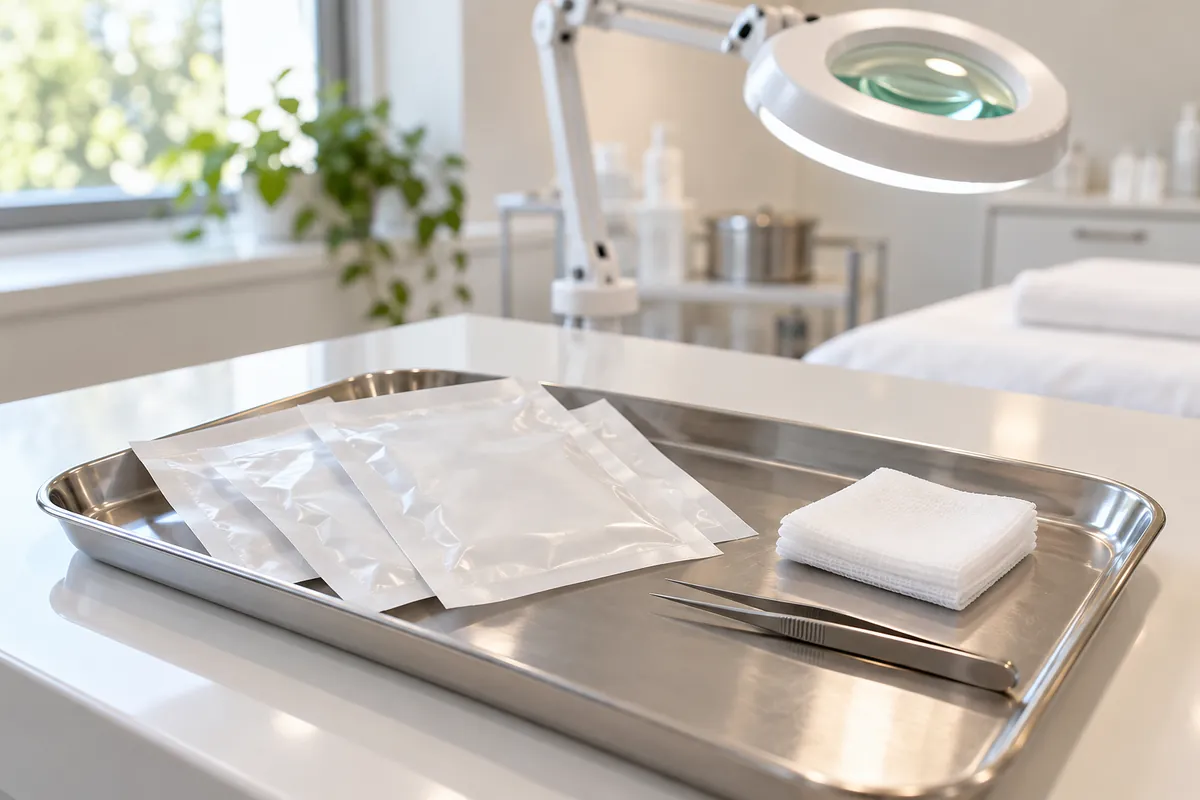
Experience counts for more here than in most cases. Ask directly whether the electrologist has treated hair over tattoos, how they handle visibility on dark ink, and whether they will do a test area. Look at the working conditions: magnification, strong adjustable lighting, sterile single-use probes opened in front of you, and a practitioner who is not in a hurry. Electrolysis is regulated differently from state to state. Many states license electrologists and others do not, so check what applies where you live on the electrolysis licensing hub, and browse local options in the studio directory.
For students and working electrologists, tattooed skin is a good test of fundamentals. Nothing about the modality changes. What changes is how much you depend on accurate insertions when you cannot see the follicle opening clearly, and how disciplined you are about inspecting skin and declining to treat when it is not ready. Those are habits built in training and supervised practice. They are also covered in my guide to electrolysis contraindications for practitioners.
The bottom line
A tattoo does not rule out permanent hair removal. It postpones it for the healing period and asks for more careful work afterward. A fresh tattoo is a temporary contraindication until the skin looks and feels exactly like the skin around it. A healed tattoo is a normal working area for electrolysis, the one permanent method that does not depend on pigment. The difference between those two situations sets the whole plan, so your electrologist needs to know about the ink before the session, not during it.
If you already have the tattoo, your next step is a consultation: describe when it was done and how it healed, and ask for a small test area. If the tattoo is still ahead of you, decide on the order now. Start hair removal as early as you can, pause before the tattoo appointment so the skin is calm, and resume once the new work has completely healed. Tell your artist and your electrologist about each other's dates, and neither appointment will get in the way of the other.

State Requirements
State licensing guides
Hours, exams, fees, and the licensing board differ by state. Open your state for the current requirements.
Looking for a practitioner or a program near you? Browse electrologists by state and city or beauty schools by state.
Common Questions
FAQ
Yes, once the tattoo has completely healed. Electrolysis treats each hair follicle with a fine probe and does not use light, so tattoo pigment does not interfere with it. This makes it the permanent hair removal option for tattooed skin, where laser and IPL are not suitable. The electrologist will work more slowly over dark or dense ink because hairs are harder to see, and may start with a small test area to check how your skin responds.
There is no fixed number of days. Tattoo studios generally describe surface healing as taking a few weeks, with deeper healing continuing longer, and large or heavily saturated pieces need more time than fine linework. The reliable test is the skin itself: no scabs, flaking, shine, pinkness, raised lines, or tenderness, so that it looks and feels like the skin around it. If you are unsure, ask your tattoo artist and let your electrologist inspect the area.
Properly performed electrolysis on healed skin is not expected to change a tattoo. The probe follows the hair follicle and the energy is delivered at its base, without bulk contact with the ink. Marks are possible on any skin if treatment is too aggressive, if crusts are picked, or if the area gets infected or sunburned, which is why technique and aftercare matter. For reassurance, ask for a test patch and take a photo of the design before and after.
Laser and IPL work by sending light that is absorbed by pigment. Tattoo ink is concentrated pigment, so it absorbs that light strongly, which can cause burns, blisters, scarring, and fading or distortion of the design. Providers either avoid tattooed skin or cover it and treat around it. Electrolysis has no such limitation because it does not rely on light. The differences are explained in the guide on electrolysis or laser hair removal.
If you have time, it is a smart order of operations. The artist works on smooth skin and the finished piece is not hidden by regrowth. Permanent removal takes a series of sessions over many months, so start early. Pause treatment on that patch a few weeks before the tattoo so the skin is completely calm, then resume with electrolysis after the tattoo has healed. Avoid waxing or electrolysis on the area right before your tattoo appointment.
For most people it feels the same as on the skin next to the tattoo. Some find tattooed skin slightly more sensitive, and redness afterward can be a little more noticeable. Sensation depends far more on the body area, hair thickness, and settings than on the ink. If you are concerned, ask for a short test session first, and tell your electrologist if that patch has ever reacted strongly to shaving or other treatments.
Leave it alone as much as possible. Do not wax, sugar, tweeze, use depilatory creams, or use any light-based device on a healing tattoo, and follow your artist's advice about when shaving is allowed. If the hair bothers you, trim it carefully with small scissors or a guarded trimmer without touching scabs or flaking skin. Once the skin has fully healed, electrolysis can begin, following the usual aftercare routine after each session.
Yes, after the cosmetic tattoo has completely healed. Laser hair removal is avoided near permanent makeup because light can burn the area or change the pigment color, so electrolysis is the usual choice for stray hairs around tattooed brows or lip lines. Let your electrologist know when the work was done and when your next touch-up is scheduled, so sessions are not placed too close to it.
Keep Reading
Related Guides


